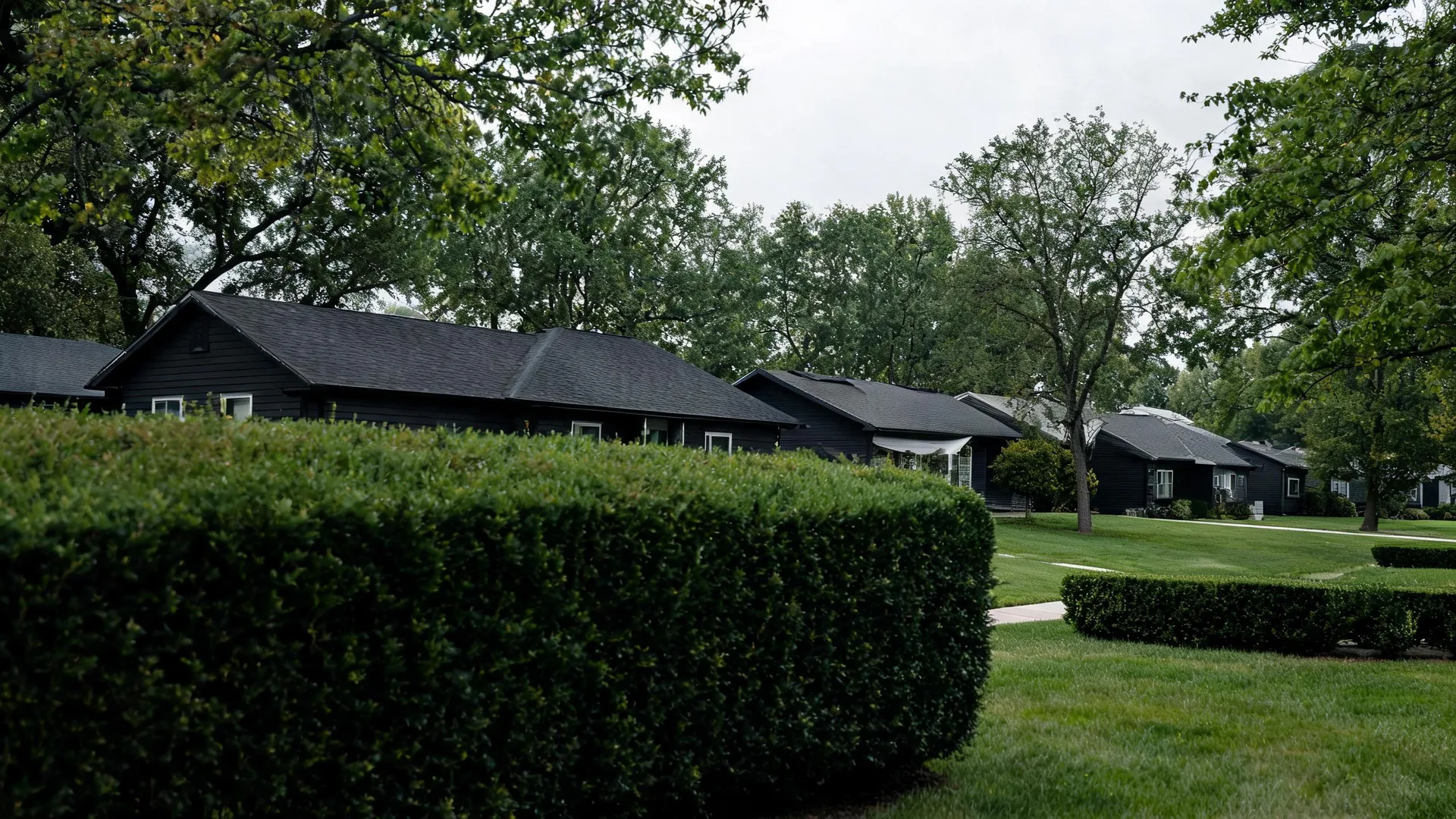
A row of dark-painted single-story houses with gray shingled roofs behind a tall trimmed hedge, with mown lawn, a walkway, and leafy trees under an overcast sky.

AC Installation in Wisconsin Rapids, WI

Tell us about the job

Takes about a minute. No obligation.

New system or replacementCentral ACWood County, WI
Step 1 of 2

What ZIP code is the job in?

Gas furnaces are the common pairing here

Utility gas heats 62.9% of homes in Wood County. An AC installation here most often means matching a new condenser and coil to a gas furnace that's already moving the air, not rethinking how the house is heated.


That shapes what your installer checks first

If gas furnace ductwork is already in place, the question is whether it's sized right for the new system. An installer matching a condenser to existing ducts needs to confirm they can handle the airflow the new equipment is rated for.

2 months
July through August, your air conditioner is on duty
79°F
the average summer afternoon it cools against
45 hail events
in ten years, and hail bends the fins on outdoor coils
13.4 SEER2
the federal minimum any new unit must meet
Isometric cutaway illustration of a house interior showing ducted HVAC piping, an indoor air handler unit, and an outdoor condenser with fan connected by a line, rendered in grey tones on a white background.
Your air conditioner works hardest from July through August.

NOAA nClimDiv, 1991–2020 normals

Your AC only has to carry July and August here, with afternoon highs averaging 79°F.

A system that doesn't run hard all year doesn't need the top tier to hold up well.

Summers here don't ask for more than a standard system can give

Power costs 17.18 cents a kWh statewide
Cooling runs July through August
Summer afternoons average 79°F
Your new AC has to fit a house built generations agoHalf the homes in Wood County were built in 1972 or earlier.

Go with a straightforward single-stage or two-stage system sized right for the house, rather than paying for variable-speed equipment built to modulate through long cooling runs. Two months of work a year is not what wears a condenser down. Age, a dirty coil, a refrigerant leak that went unnoticed, that's what ends up calling for service. Wood County also sees damaging wind and hail most years, so where the unit sits and how it's protected matters more than which tier you buy. Put the money into correct sizing and a clean installation instead.

Get it done in June, before July asks anything of it

June is the month before cooling starts here. Have the new system in by then and it's running on day one of July, not mid-install during the first hot week. Wait until the old one fails in season and you're picking from whatever's on hand, not what's sized right for the house.

Find a contractor
A man in a dark shirt and tan work pants, seen from behind, climbs porch steps toward a green front door while carrying a waxed canvas tool bag, with a potted evergreen shrub to the left.
An outdoor air conditioning condenser unit mounted on a concrete pad surrounded by gravel, photographed against a partly cloudy blue sky.

What matters is how often it starts, not how long it runs

Every system has a duty cycle, the ratio of time it runs to time it sits off. Oversize a unit and it short cycles, hitting the thermostat setting and shutting off before it finishes a full dehumidifying run. That short run does more starting and stopping, and starts are what wear a compressor, not steady running. Ask what load calculation the installer used, not just the tonnage they'd default to. Also ask how they verified it, a manual load calculation based on the house, not a rule of thumb from the old unit's size. A system sized to run in longer, steadier stretches will rack up more total hours over a season, but it's the stopping and starting that shortens a compressor's life, not the hours themselves.

A proper sizing calculation adds up the house

Window area and direction, insulation, ceiling height, how much wall faces the sun. All of it gets added up, room by room. The old condenser's tonnage tells an installer nothing except what was there before. It could have been wrong from the start, or sized for a roof or windows that have since changed.

Too big fails quieter than too small, which is why it gets missed

An undersized system announces itself. The house never quite cools. An oversized one seems fine at first. It blasts cold air, hits the thermostat fast, and shuts off. The house cools but stays damp, and the coil and compressor take the wear of all that extra starting and stopping.

Aerial view of a gray outdoor air conditioning condenser unit mounted on a concrete pad next to a house with vinyl siding.

Going above the federal minimum saves little here, about $10 a year.

  • A higher-efficiency unit$120 a year
  • A new unit at the federal minimum, 13.4 SEER2$130 a year

Estimates for a typical Wood County home, from EIA household energy data, Wisconsin fuel prices and NOAA climate normals. Your home will differ.

Installation day starts before the new unit ever comes off the truck. The old condenser and coil get pulled, and the line set gets inspected, not just reused on the assumption it's fine. If it's being reused, it gets flushed clear of old oil and debris so none of it ends up in the new compressor. The pad gets leveled or replaced, since a unit sitting crooked drains wrong and strains the lines over time. Copper gets brazed, the system gets pressure tested for leaks before any refrigerant goes in, then it gets evacuated with a vacuum pump to pull out moisture and air. Only after that does the system get charged, and a careful installer weighs in the charge rather than guessing by feel. Before they leave, they should check static pressure and confirm the thermostat and condensate drain are working, not just that the air coming out is cold.