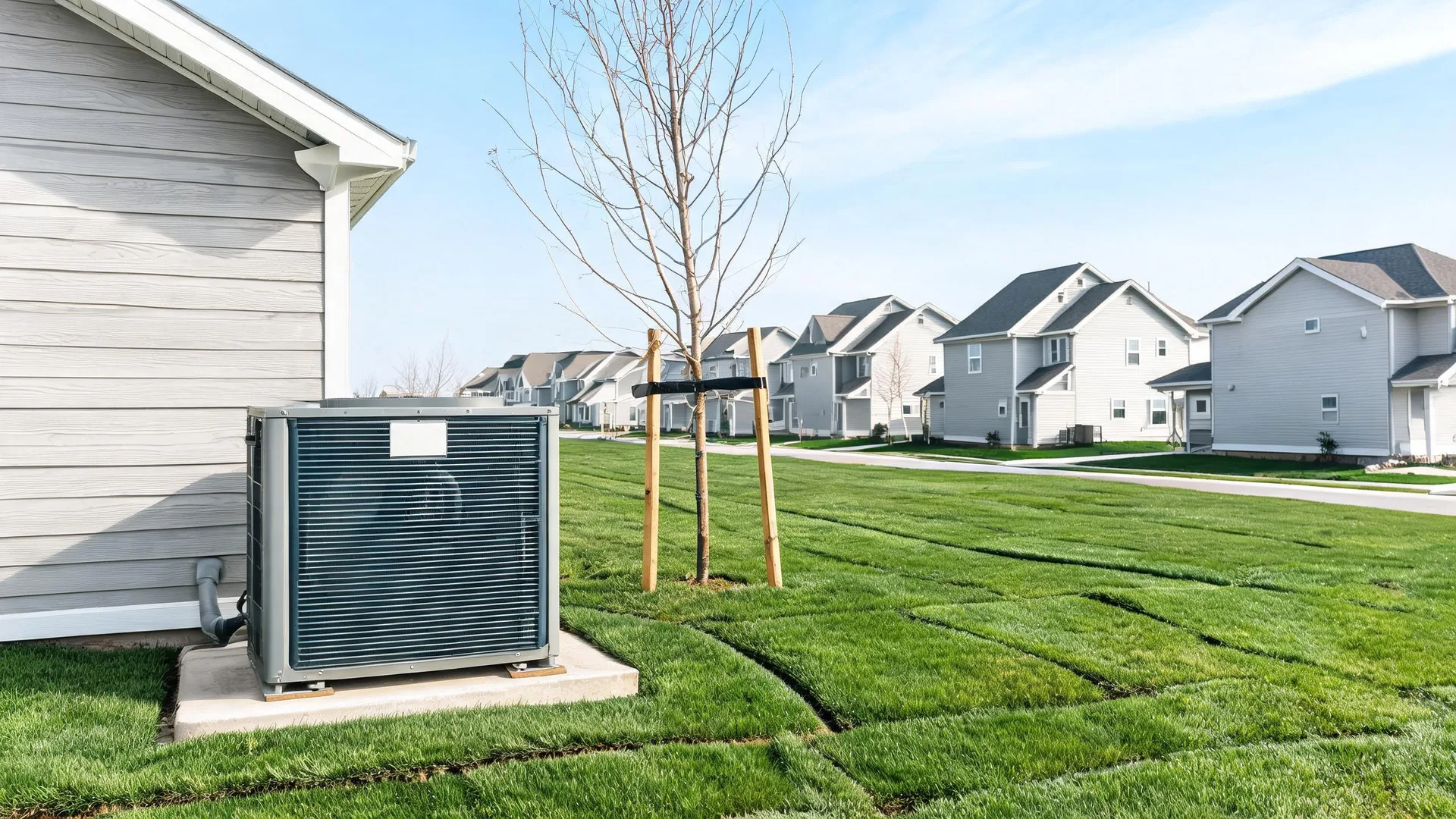
Storms come through here often
Waukesha County saw 212 severe weather events between 2015 and 2024, including 103 damaging wind events, 77 hail events and 10 tornadoes. An outdoor AC unit sits outside through all of it.
Takes about a minute. No obligation.
Waukesha County saw 212 severe weather events between 2015 and 2024, including 103 damaging wind events, 77 hail events and 10 tornadoes. An outdoor AC unit sits outside through all of it.
Almost one in five Wisconsin households went at least 24 hours without power in 2024. A new AC install is a chance to plan for that, not just for the heat.

NOAA nClimDiv, 1991–2020 normals
A unit sized from a load calculation matches the house it's cooling.
Guess the size and you get a system that short cycles or never catches up, and neither way is cheap to live with.



Waukesha County falls under zone 5A in the energy code, a cool, humid zone where heating carries the bigger share of the year. That still shapes what can go into a new AC. Any split system under 45,000 Btu an hour built since the start of 2023 has to hit 13.4 SEER2 or better, the federal floor. A contractor sizing your system from a load calculation will be working from that minimum, not around it. Installed now, the unit also qualifies for a federal tax credit, worth checking into before you settle on a model.
The crew needs a spot for the outdoor unit and a plan for what happens if the power drops. Both are easier to settle before the install than after.
Find a contractor
Two systems can carry the same rating and still behave differently once they're running. Ask what the compressor is rated to handle over its life, not just on day one. Ask whether it's a single-stage unit that's either on full or off, or a two-stage or variable-speed compressor that can run low most of the time and save the full output for the hottest stretch. Ask what the warranty actually covers: parts only, or parts and the labor to put them in, and for how many years. Ask who services that brand locally, because a warranty is only worth as much as the shop that can honor it. Ask about the sound rating too. A unit that runs for hours on end is one you'll hear from the yard or through a window, and some are built quieter than others at the same capacity.
An outdoor condenser and the indoor coil are rated as a pair. Put a new condenser on an old coil and the system can run, but it won't hit the efficiency or the capacity it's rated for, and that shortens the life of the compressor. Matching the two adds a cost but it's what makes the rest of the install worth doing.
A condenser and coil sized correctly still need ducts that can carry the air they move. Ducts built for a smaller or older system sometimes have to be sealed, resized, or added to before the new equipment can actually deliver what it's rated for. That work shows up in the estimate as its own line, separate from the equipment itself.
Estimates for a typical Waukesha County home, from EIA household energy data, Wisconsin fuel prices and NOAA climate normals. Your home will differ.
Installation starts with the old system coming out, the indoor coil, the outdoor condenser, and the line set that connects them. A tech will recover the refrigerant from the old lines before anything gets disconnected, since it can't just be vented into the air. Setting the new condenser means a level pad outside and clearances on all sides so it can pull air through the coil. Inside, the new coil goes in above or beside the furnace, and the line set gets run between the two, then pressure tested for leaks before any refrigerant goes in. Once it's charged and the electrical is tied in, the system gets run through its paces, checking airflow, checking the charge against what the manufacturer calls for, checking that the thermostat is actually talking to the equipment. None of that is quick work, and a system that gets fired up and left without that check tends to show its problems later rather than that day.