




A nighttime view of a tree-lined residential street with illuminated two-story brick houses and street lamps.

AC Installation in Sturgeon Bay, WI

Tell us about the job

Takes about a minute. No obligation.

New system or replacementCentral ACDoor County, WI
Step 1 of 2

What ZIP code is the job in?

Propane heats more homes in Door County than anything else, at 40.7%. Utility gas is close behind at 37.5%, and electricity covers another 13.4%. None of that decides your AC on its own. Whatever heats your home in winter, cooling is its own system, usually a central air unit matched to whatever furnace or air handler is already in place. If you're replacing an old AC, matching what's already there is almost always the simplest path. If you're adding cooling where there wasn't any before, what heats your home still matters, since it tells you what kind of furnace or air handler is sitting in that spot right now.

2 months
July through August, your air conditioner is on duty
75°F
the average summer afternoon it cools against
16 hail events
in ten years, and hail bends the fins on outdoor coils
13.4 SEER2
the federal minimum any new unit must meet
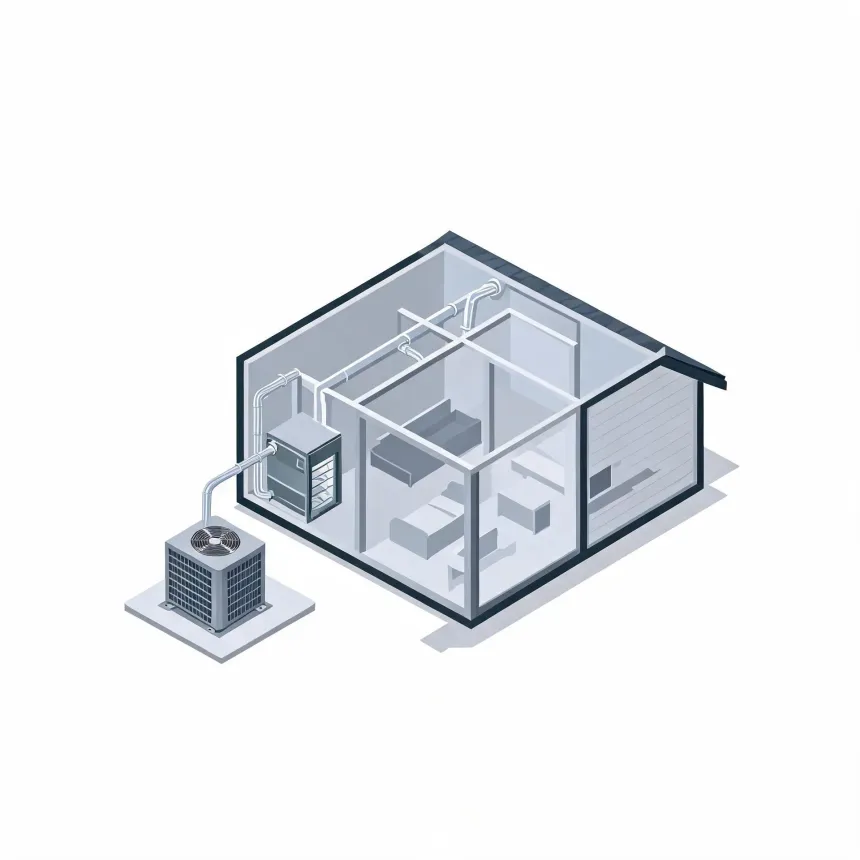
Isometric grayscale illustration of a cutaway house showing interior rooms, ductwork, an indoor air handler, and an outdoor condenser unit on a pad connected by lines.
Your air conditioner works hardest from July through August.

NOAA nClimDiv, 1991–2020 normals

A standard central air unit, sized right for your house, is what fits here.

At 17.18 cents per kilowatthour, there's no efficiency upgrade to chase, just a system that matches your home and runs the way it should.

Two months of cooling means June is the month to get it done, not July

Cooling runs July through August
Summer afternoons average 75°F
43 damaging wind events from 2015 to 2024
A system that barely has to workCooling runs two months a year here, with afternoons averaging 75°F.

Any split-system AC under 45,000 Btu/h sold new has to hit at least 13.4 SEER2. That's a federal floor, the same number whether you're in Sturgeon Bay or anywhere else in the country. Door County falls in climate zone 6A, a cold zone with winters that run long, but that classification speaks to the building code, things like insulation and window specs, not to what SEER2 your AC needs to be. So you won't find a unit below that rating on the market now, and there's no higher regional minimum pushing you past it either. What you're choosing between is sizing and features, not efficiency tiers.

Pick reliable, not top of the line

It won't be worked hard here, so pick a reliable system that fits. You don't need the top efficiency model.

Find a contractor
A gray metal air conditioning condenser unit mounted on a concrete pad in a flat grassy field under a partly cloudy sky.

The size comes from a calculation, not a guess

Size comes from a load calculation, not a guess based on square footage. A contractor measures the house. How much window area faces which direction, how much insulation is in the attic, how many people live there, how the rooms connect. That math produces a number in Btu per hour, and the unit gets picked to match it. Too big and the AC cools the air fast, shuts off, and never runs long enough to pull moisture out, so the house feels cold and clammy at once. Too small and it runs flat out all afternoon, never catching up, and the compressor wears from the strain of constant cycling. Right sized, it runs a long, steady cycle, cools the air evenly, and shuts off having done the job without strain. The ductwork has to match too. A unit sized right but choked by undersized return ducts will still struggle. A contractor checks both ends, the equipment and the path the air travels, before calling the job done.

Ask what the load calculation found

Any contractor bidding the job should be able to give you the Btu per hour number they landed on and explain how they got there, not just the tonnage they plan to install. If a quote shows up without that number, the size was guessed, and a guessed size means paying for a unit that either short cycles or runs flat out trying to keep up.

Ask how the ductwork was checked

The unit is only one part of the system. A contractor who walks the attic or crawlspace and checks the return ducts, not just the pad where the condenser sits, is sizing the whole path the air has to travel. If a bid only talks about the condenser and coil, ask what they found when they looked at the ducts. An undersized return will choke even a unit sized exactly right.

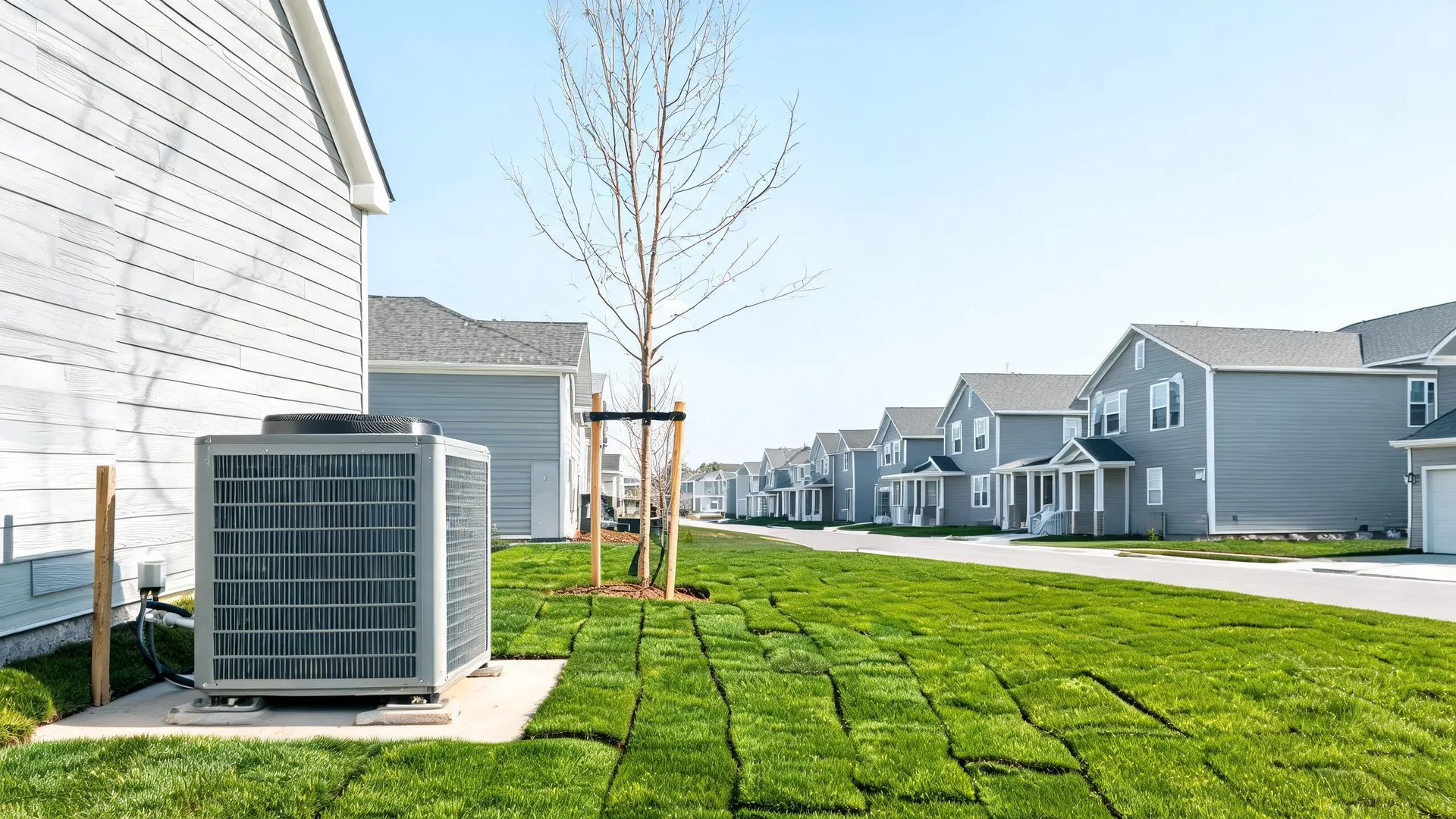
Overhead view of an air conditioning condenser unit on a concrete pad next to a house with asphalt shingle roofing and vinyl siding.

Going above the federal minimum saves little here, about $10 a year.

  • A higher-efficiency unit$80 a year
  • A new unit at the federal minimum, 13.4 SEER2$90 a year

Estimates for a typical Door County home, from EIA household energy data, Wisconsin fuel prices and NOAA climate normals. Your home will differ.

Installation day starts with the old equipment coming out, not the new one going in. The condenser outside gets disconnected, the coil in the plenum comes out, and the line set gets cut loose. Whoever's doing the work checks the electrical disconnect and the condensate drain before anything new goes in, because both have to tie into the new unit the same way they tied into the old one. Setting the condenser on its pad and running new line set is usually the fast part. Connecting the coil, pulling a vacuum on the lines to clear out air and moisture, then charging the system with refrigerant is what takes the time, since a system charged wrong will never cool right no matter how well it was sized. Before anyone leaves, the system should run through a full cycle while someone checks the temperature drop across the coil and listens for anything that sounds off.