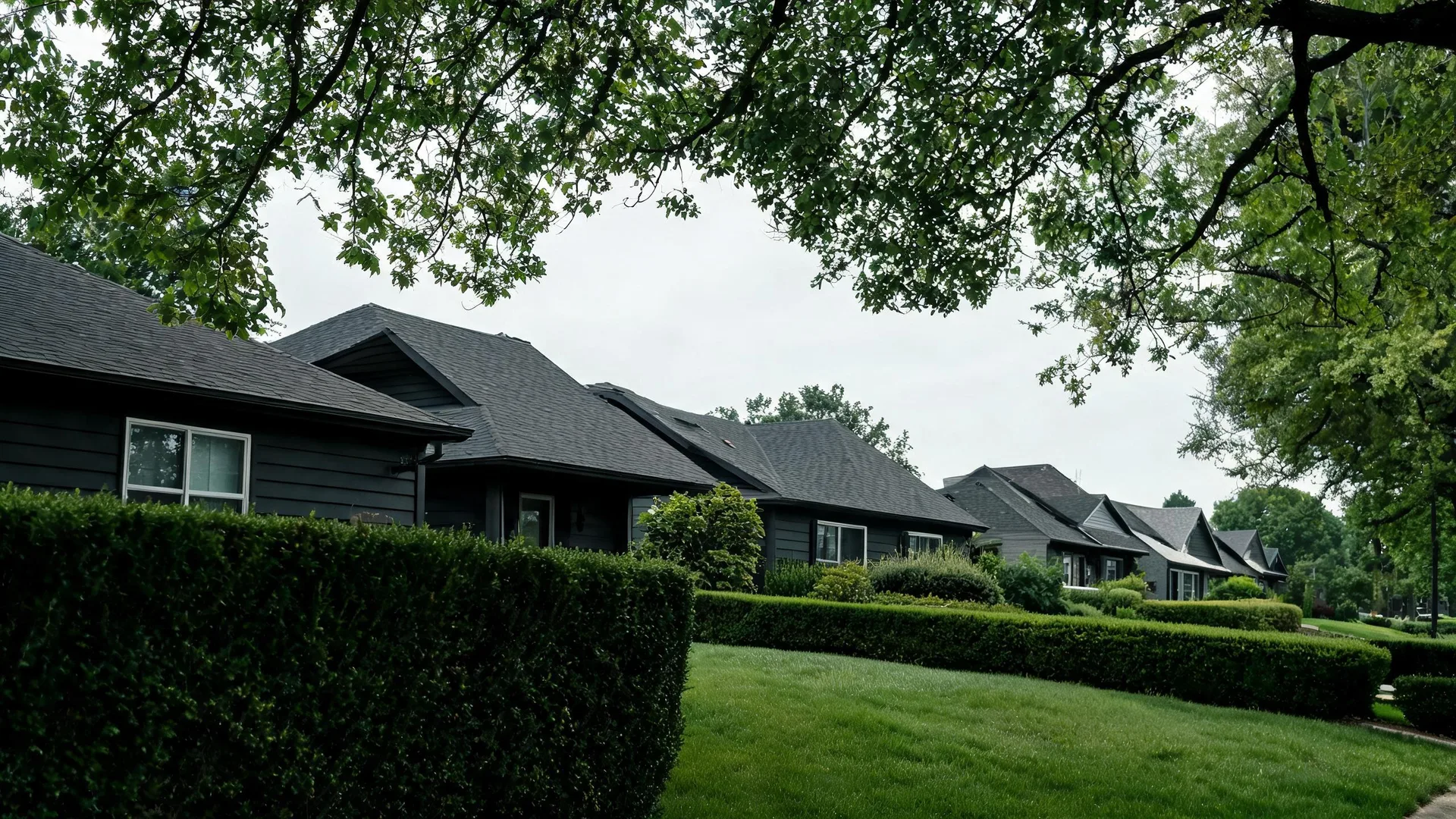
A row of dark-sided single-story houses with gray shingled roofs behind trimmed hedges and a mown lawn, framed by overhanging tree branches under an overcast sky.

AC Installation in Stevens Point, WI

Tell us about the job

Takes about a minute. No obligation.

New system or replacementCentral ACPortage County, WI
Step 1 of 2

What ZIP code is the job in?

Gas heat is the norm here

Utility gas heats 56.4% of homes in Portage County, with another 18.1% on LP gas. Most of the furnaces paired with new AC systems here run on one of those two fuels, so an installer is usually matching a gas furnace with a new coil and condenser rather than starting from scratch.

Electric homes need a different look

Electricity heats 17.8% of homes in the county. If your furnace or air handler runs on electric heat, sizing the new AC means checking that existing setup rather than assuming a gas-furnace pairing, since the air handler and ductwork can differ from what a gas system uses.

2 months
July through August, your air conditioner is on duty
79°F
the average summer afternoon it cools against
25 hail events
in ten years, and hail bends the fins on outdoor coils
13.4 SEER2
the federal minimum any new unit must meet
Isometric cutaway illustration of a single-story house showing interior rooms with ductwork and an air handler, connected by refrigerant lines to an outdoor condenser unit on the left.
Your air conditioner works hardest from July through August.

NOAA nClimDiv, 1991–2020 normals

A standard size and efficiency rating is all a Stevens Point home needs for central AC.

At 17.18 cents per kilowatthour, there's no local reason to pay more for a bigger or higher-efficiency unit than the house calls for.

Two months of cooling, so July should never be the first time it runs

Cooling runs July through August
Summer afternoons average 79°F
44 damaging wind events from 2015 to 2024
A system that doesn't work hard hereAfternoon highs average 79°F, and cooling only runs July through August

Any split-system air conditioner installed here now has to meet 13.4 SEER2 at minimum, the federal floor for units this size. Portage County falls under zone 6A, a cold, humid climate zone with winter lasting most of the year, which shapes the furnace or air handler side of the pairing more than it does the AC itself. That SEER2 minimum applies everywhere the same way, so a contractor here isn't working from a stricter regional rule, just the national one. There's also a federal tax credit available for qualifying high-efficiency equipment, worth asking about when comparing units, though what a given system qualifies for depends on its rated efficiency.

Pick the right fit, not the biggest number

A unit sized to this house, installed right, will cover those two months without strain. Put the budget into a correct install and good ductwork rather than a higher SEER2 number than the climate asks for.

Find a contractor
A man in a dark cap, dark long-sleeved shirt and brown work pants walks up porch steps toward a pale green front door, carrying a worn canvas tool bag in his right hand, with a potted evergreen shrub beside the entry.
A gray residential air conditioner condenser unit mounted on a concrete pad in an open grass field.

The install decides more than the equipment does

The unit itself is only part of the bill. What a contractor charges for also covers getting refrigerant lines run correctly, setting the right airflow across the coil, and making sure the ductwork already in the house can actually move the air a new system is rated to push. A condenser that's oversized for the ductwork feeding it will short cycle, turning on and off more than it should, which wears the compressor faster than steady runtime would. Matching the coil to the condenser matters too. They're rated as a pair, and mixing a new condenser with an old coil can cost efficiency even if both are in good shape. None of that shows up in a brochure number. It shows up in how long the system lasts and whether it cools evenly from one room to the next.

Ask what the load calculation found

A contractor should size the system to the house itself, the square footage, the windows, the insulation, not just swap in whatever size is already there. If nobody mentions doing this calculation, ask why not. A unit sized on a guess runs longer than it should in mild weather and still can't keep up on the hottest days.

Ask who services what you're buying

Once the system is in, something will eventually need a filter change, a coil cleaning, or a repair under warranty. Ask who handles that, how soon they can come out, and whether the installer stands behind their own labor separately from the manufacturer's parts warranty. A low price on the install means less if nobody answers the phone later.

Aerial view of a gray outdoor air conditioning condenser unit mounted on a concrete pad next to a house with vinyl siding.

Going above the federal minimum saves little here, about $10 a year.

  • A higher-efficiency unit$120 a year
  • A new unit at the federal minimum, 13.4 SEER2$130 a year

Estimates for a typical Portage County home, from EIA household energy data, Wisconsin fuel prices and NOAA climate normals. Your home will differ.

Install day starts with the old equipment coming out, not the new unit going in. The condenser outside gets disconnected and hauled off, and if the coil inside the air handler or furnace is being replaced too, that comes out as a pair. The refrigerant lines running between them usually get replaced rather than reused, since old lines can hold contaminants that shorten the life of new equipment. Once the new coil and condenser are set, a tech checks airflow across the coil and verifies the refrigerant charge against what the manufacturer specifies for that line length, not just a fixed number. The system gets tested running, with someone checking temperature split between the air going in and the air coming out. A rushed charge or a skipped airflow check won't show up that day. It shows up months later as a system that runs long and still doesn't cool evenly.