Most homes here run on gas heat
Utility gas heats 74.3% of homes in Sheboygan County. The furnace handles winter and stays separate from whatever cools the house in summer, which is the setup most AC installers here will expect to see.
Takes about a minute. No obligation.
Utility gas heats 74.3% of homes in Sheboygan County. The furnace handles winter and stays separate from whatever cools the house in summer, which is the setup most AC installers here will expect to see.
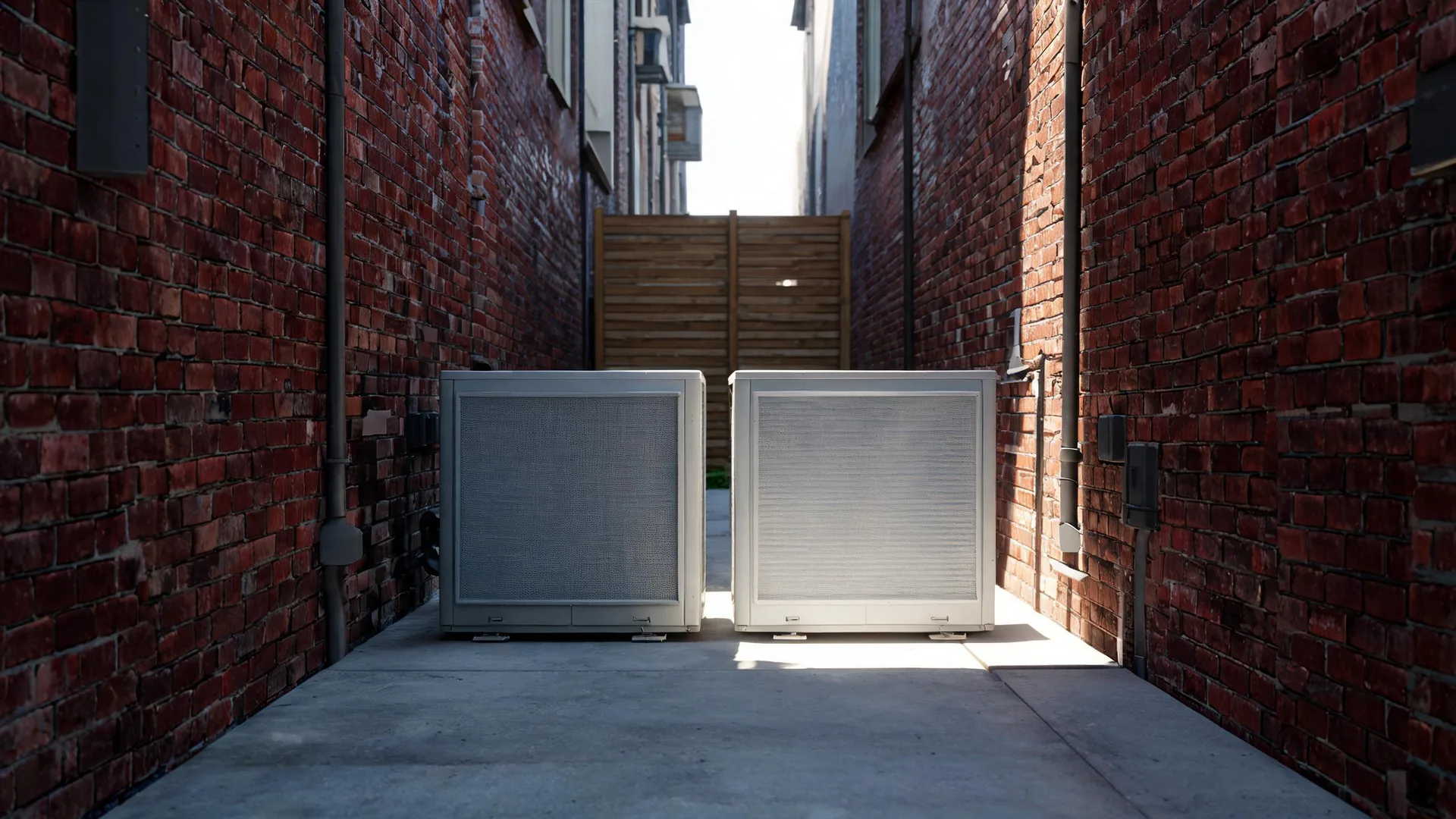
If your house already has a gas furnace, central air usually means adding an outdoor condenser and a coil that works with the ductwork and blower you already have, not replacing the whole system.

NOAA nClimDiv, 1991–2020 normals
Half the homes in Sheboygan County were built in 1970 or earlier.
If your ductwork and furnace date back that far, the install has to work with what's already there, not a layout built for modern equipment.



Cooling here only has to earn its keep in July and August, with afternoon highs averaging 78°F across the summer. That's a short, mild season compared to what the furnace handles the rest of the year. A system sized right for this place doesn't need to be the highest-efficiency unit on the lot, because it isn't running hard enough or long enough for that difference to matter much. What matters more is picking a condenser and coil that match the ductwork already in the house. Sheboygan does see its share of wind and hail, so whatever goes outside should hold up to weather, not just heat.
A standard-size, standard-efficiency system is the right call here. Summers are mild enough that paying more for the highest efficiency rating won't earn it back in lower bills, and at 17.18 cents per kilowatthour there's no local power cost pushing you toward a pricier unit either. Get a condenser and coil sized to match the ductwork already in the house.
Find a contractor
Two months of real work a year, and mild ones at that, is a light load for a condenser to carry. That's the case for spending on the install, not the spec sheet. Get the sizing and the match to your ductwork right. Skip paying more for a top-tier efficiency rating this system won't run enough to earn back. Put that money into a unit built to take wind and hail instead, since that's what it'll actually face standing outside.
A contractor has to work out how much heat the house gains in summer before quoting equipment. That number sets the tonnage. Tonnage sets the size of the condenser and the coil, and sometimes the size of the ductwork needed to move that much air. Skip this step and you either pay for cooling capacity the house doesn't need or end up with a system that can't keep up.
A new condenser and coil won't perform the way the spec sheet says if the ductwork underneath them is undersized or leaky. Sealing duct runs, adding a return, or building out a plenum to fit the new coil all add labor beyond the equipment itself. A straightforward swap onto ductwork that already moves enough air costs far less than one where the ducts have to be reworked first.
Estimates for a typical Sheboygan County home, from EIA household energy data, Wisconsin fuel prices and NOAA climate normals. Your home will differ.
Install day starts outside, not in the house. The condenser needs a pad, room for airflow on all sides, and a clear line to the breaker panel. Indoors, the coil goes in above or beside the furnace, tied into the plenum, with a line set connecting it to the outdoor unit and a drain for condensation. Once everything's connected, the system gets evacuated to pull out air and moisture before refrigerant goes in, then charged to the exact weight the manufacturer specifies. The last part matters most. Airflow across the coil gets measured, refrigerant pressures get checked against the charts, and a full run cycle gets watched start to finish. A system that's wired up and blowing cold air isn't the same as one that's been checked against the numbers it's supposed to hit.