





A row of illuminated two-story brick houses with front porches and mature trees photographed at twilight.

AC Installation in Racine, WI

Tell us about the job

Takes about a minute. No obligation.

New system or replacementCentral ACRacine County, WI
Step 1 of 2

What ZIP code is the job in?

Gas heats 75.6% of homes in Racine County, more than any other fuel. When central air gets added to a setup like that, it ties into the existing ductwork and shares the blower with the furnace, so the installer is adding a condenser and coil rather than building an air delivery system from nothing. Electric heat covers 18.0% of homes here. If your home is one of those, the contractor will size the AC around whatever air handler is already in place, since it won't be set up the same way as a gas furnace. Either way, matching what's already there is usually simpler than switching fuel types just to add cooling.

3 months
June through August, your air conditioner is on duty
80°F
the average summer afternoon it cools against
25 hail events
in ten years, and hail bends the fins on outdoor coils
13.4 SEER2
the federal minimum any new unit must meet
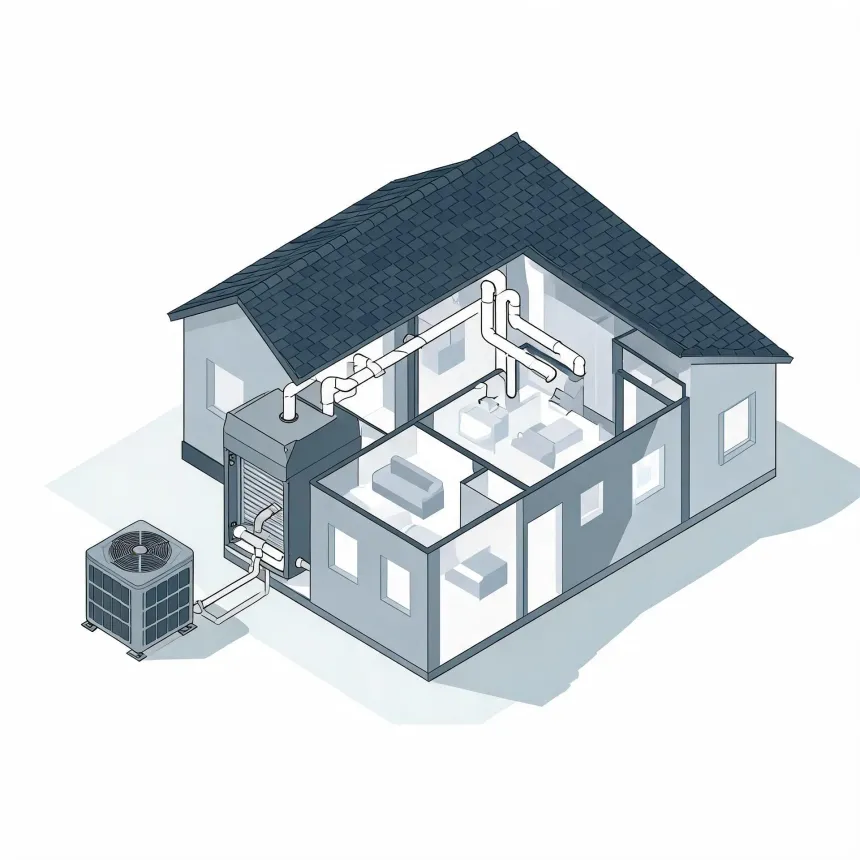
Isometric illustration of a cutaway single-story house showing interior rooms, ductwork running from an indoor air handler, and an outdoor condenser unit on a pad beside the building.
Your air conditioner works hardest from June through August.

NOAA nClimDiv, 1991–2020 normals

June through August is when cooling runs here.

May is the month to have a new system in, before the first hot stretch asks anything of it.

Three months of real heat a year is not a hard life for a condenser

Cooling runs June through August
Summer afternoons average 80°F
48 damaging wind events from 2015 to 2024

A standard sized, standard efficiency system is the right call here. Racine doesn't push cooling equipment any harder than most of the country does, so there's no case for oversizing or for paying up for a higher tier of efficiency than you'd otherwise choose. What does matter is the rate you're paying to run it. Wisconsin homes paid 17.18 cents per kilowatthour in 2024, and that cost applies to whatever size unit ends up outside your house. A correctly sized system draws only what the space actually needs, where an oversized one cycles on and off and wastes power doing it. Get the sizing right and the efficiency question mostly takes care of itself.

Your new system has to fit the house you have

Half the homes in Racine County were built in 1968 or earlier. An installer sizing your new system has to work with the house as it stands, not a blank slate, fitting the equipment to the ductwork and the space already there rather than the other way around.

Find a contractor
A man in a dark long-sleeved shirt and brown work pants, seen from behind, carries a worn canvas duffel bag up porch steps toward a green front door of a house with horizontal siding and a potted shrub.
An outdoor air conditioning condenser unit mounted on a concrete pad surrounded by gravel, photographed against a partly cloudy blue sky.

Running only part of the year means fewer start-ups, not an easier life

A condenser that only runs in the warm months spends the rest of the year sitting outside doing nothing, and that idle time is easy on it. Cycling wears parts out more than running does. Every start pulls the compressor from a dead stop and pushes current through the motor windings, and that moment of starting is harder on the unit than an hour of steady running. A system that only runs a few months a year sees fewer of those starts over its life than one that runs nearly year round. What shortens the life of outdoor equipment is usually exposure, not use. Leaves and debris left against the coil, a fence or shrub planted too close for air to move through, that kind of thing does more damage than the running does. A unit that sits idle all winter still needs a look before the first hot day. Refrigerant doesn't get used up sitting there, but a slow leak can go unnoticed for months and only show up as weak cooling once the system has to work again.

The rating is a lab ratio, not a promise

The efficiency number compares the cooling a system produces against the power it draws, tested under set conditions in a lab. The condenser on your house won't hit that exact number every day. How the ductwork is sealed, how the refrigerant charge is set, and how the coil is matched to the condenser all move the real result up or down from what the label says.

A higher number only pays off if the install backs it up

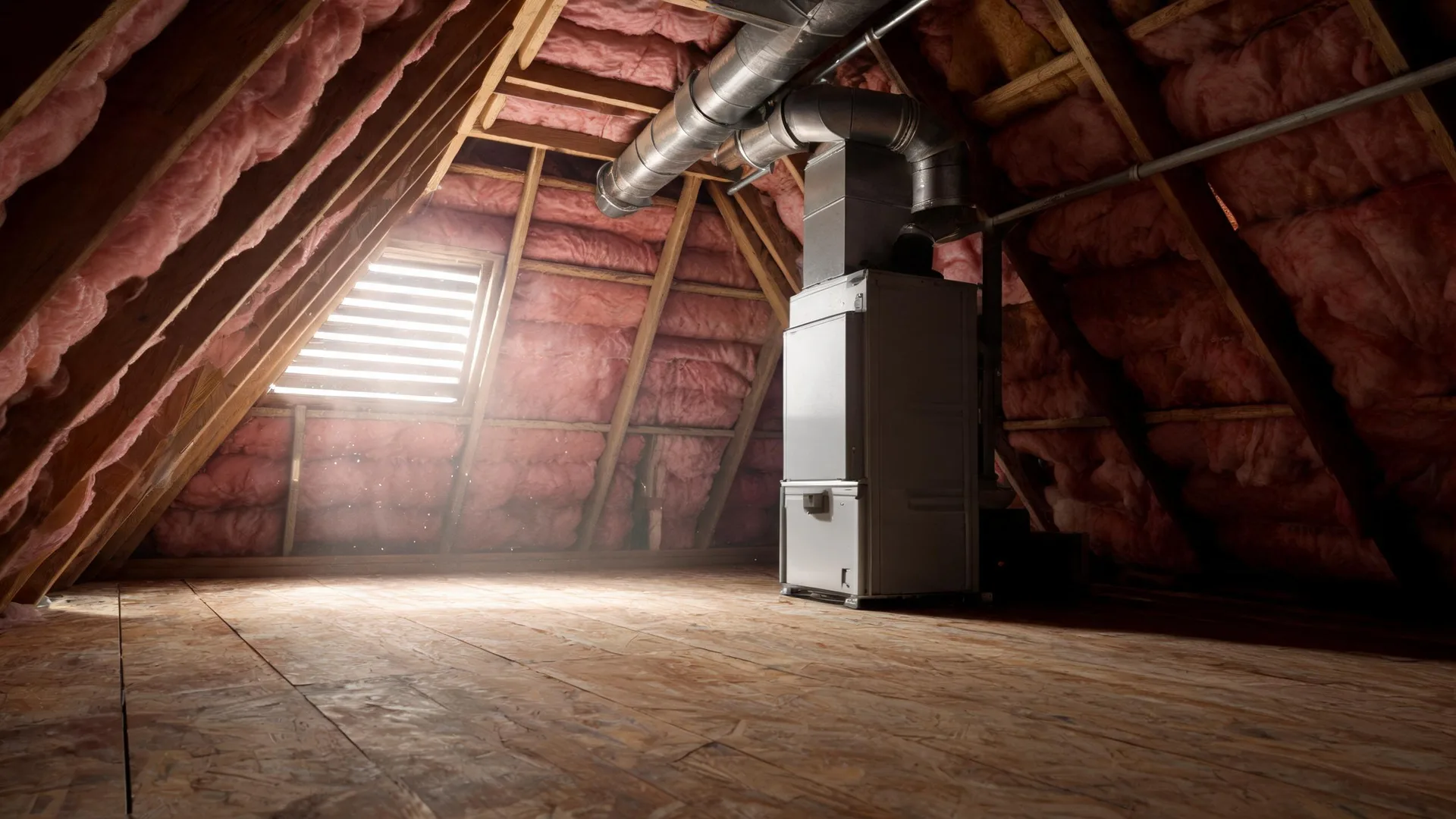
A high efficiency condenser paired with a leaky duct run or a mismatched coil runs like a cheaper unit, because the parts around it hold back the result the label promises. Before paying for a higher tier, ask the installer how the ductwork and coil will be set up to actually deliver it.

Overhead view of an outdoor AC condenser unit on a concrete pad next to a house with a dark shingle roof.

Going above the federal minimum saves little here, about $20 a year.

  • A higher-efficiency unit$160 a year
  • A new unit at the federal minimum, 13.4 SEER2$180 a year

Estimates for a typical Racine County home, from EIA household energy data, Wisconsin fuel prices and NOAA climate normals. Your home will differ.

Ask what's being sized, not just what's being sold. A contractor should walk the house and the ducts before naming a system size, not after. Ask what happens at the coil, since a condenser that isn't matched to the right coil won't deliver the rating on its label no matter what that label says. Ask how they're setting the refrigerant charge rather than just connecting the lines, because a charge that's off by even a little costs you cooling and costs the compressor wear it didn't need to take. Ask what the warranty actually covers, parts or labor or both, and for how long, since that's often where one quote is worth more than another even at the same price. And ask what maintenance the system needs going forward. A straight answer to all of this tells you more about who you're hiring than any number on a spec sheet.