





A dark two-story house with a covered porch stands behind a hedge and large deciduous trees, viewed from a low angle across a mowed lawn under an overcast sky.

AC Installation in Platteville, WI

Tell us about the job

Takes about a minute. No obligation.

New system or replacementCentral ACGrant County, WI
Step 1 of 2

What ZIP code is the job in?

Grant County saw 186 severe weather events between 2015 and 2024. That includes 113 damaging wind events, 36 hail events, and 7 tornadoes. An outdoor AC unit sits outside through all of it, exposed to wind-driven debris and hail. Add in winter, when the county was hit by 26 ice storms, blizzards, and heavy snow events over that same stretch. Statewide, 18% of households went at least a full day without power in 2024. A new system is worth planning with that in mind.

3 months
June through August, your air conditioner is on duty
80°F
the average summer afternoon it cools against
36 hail events
in ten years, and hail bends the fins on outdoor coils
13.4 SEER2
the federal minimum any new unit must meet
Isometric line illustration of a cutaway house showing interior rooms, ceiling ductwork, an indoor air handler unit, and an outdoor condenser connected by lines along the exterior wall.
Your air conditioner works hardest from June through August.

NOAA nClimDiv, 1991–2020 normals

Cooling in Grant County runs three months a year, June through August.

Install before June and you set the date. Wait, and a breakdown picks it for you.

Half these houses were built before central air was standard

Half the homes here were built by 1973
Climate zone 5A
Power here costs 16.25 cents per kilowatt-hour
Gas heats this countyUtility gas heats 45.2% of homes in Grant County, more than any other fuel.

Grant County falls under zone 5A in the 2021 energy code, a cool, humid climate where heating carries the bigger share of the work. Any split-system air conditioner manufactured on or after January 1, 2023 has to clear the federal minimum for this size of unit, 13.4 on the SEER2 scale. That floor applies everywhere, but it sets the baseline a contractor will start from when sizing a system for this house. Units above that minimum cost more up front and use less power to do the same cooling. With power already expensive here, that difference shows up on the bill every summer the system runs.

Plan the install around the weather, not just the heat

A new installation is a chance to decide where the outdoor unit sits and what shields it from wind and hail, before a storm makes that choice for you. Ask what happens to heat and hot water if the power goes out, too, and plan the install around the answer.

Find a contractor
A gray residential air conditioner condenser unit mounted on a concrete pad in an open grass field.

An older home needs the install sized to it, not just the square footage

If your house is one of the half built in 1973 or earlier, a contractor sizing the system needs to know what it's going into, not just the square footage. An old duct run or an old electrical panel can change what the installer can put in, and what it costs to put it in right. Ask the contractor to look at what's already there before they quote the unit.

Size drives the quote

A contractor sizes the unit to the house: square footage, ceiling height, window count and orientation, how much shade the house gets. Go too big and the system short cycles, cooling the air fast but never running long enough to pull the moisture out. Go too small and it runs constantly and still can't keep up on the hottest days. Getting this right takes a load calculation, not a guess, and that calculation shapes everything priced after it.

The install is more than the unit

Setting the outdoor unit on a pad is the easy part. The line set connecting it to the indoor coil has to be sized right and run correctly. If the ductwork already in the house wasn't built for cooling, it may need sealing, resizing, or new returns added so air actually reaches every room. The electrical circuit feeding the unit has to match what the compressor draws. Each of those is its own job before the system ever makes cold air.

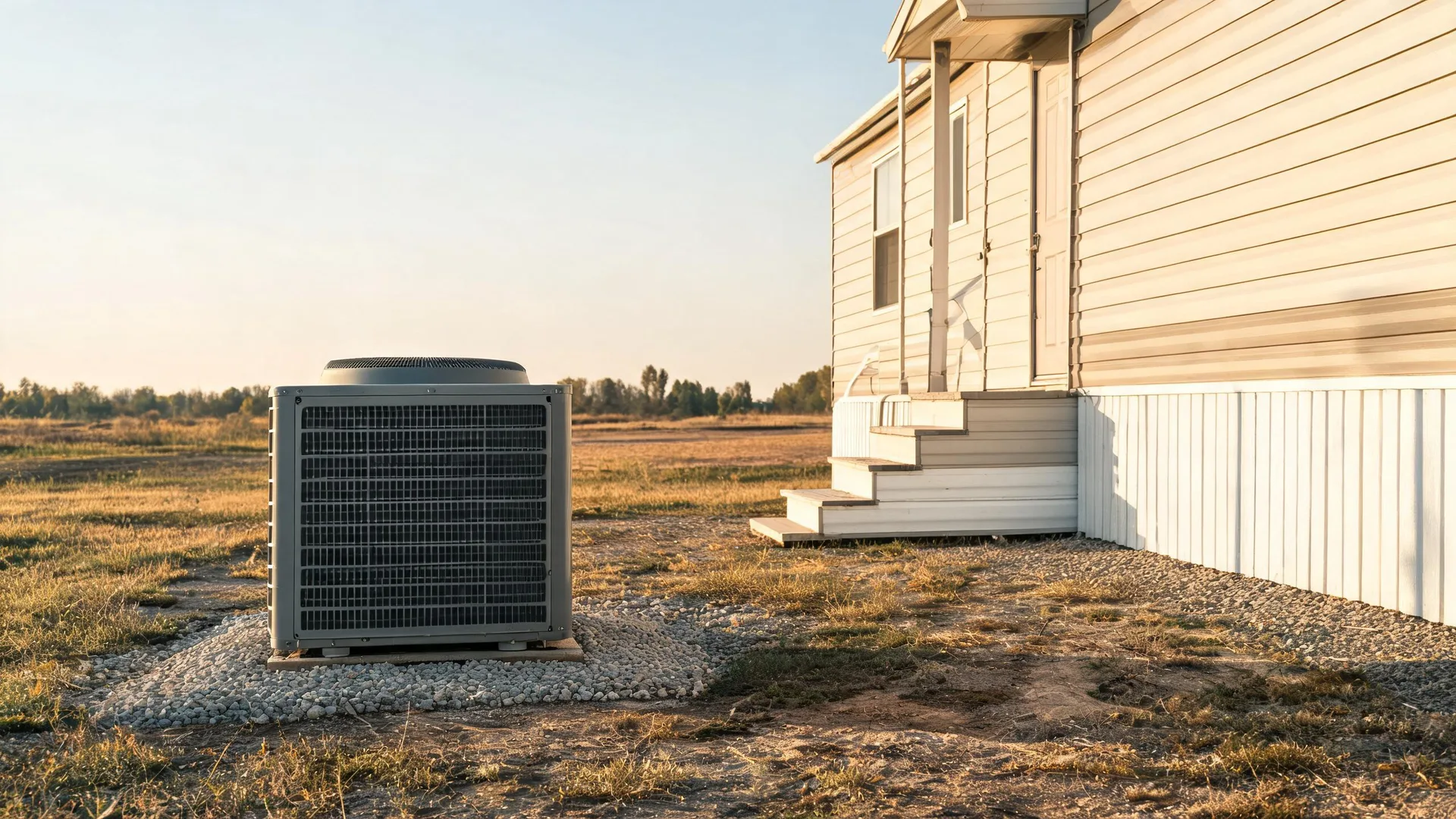
An overhead view of a residential air conditioning condenser unit mounted on a concrete pad next to a house with vinyl siding.

Going above the federal minimum saves little here, about $20 a year.

  • A higher-efficiency unit$170 a year
  • A new unit at the federal minimum, 13.4 SEER2$190 a year

Estimates for a typical Grant County home, from EIA household energy data, Wisconsin fuel prices and NOAA climate normals. Your home will differ.

Installation day starts before anyone touches the house. The outdoor unit and indoor coil have to be matched, and the refrigerant lines run between them before either one gets connected. The old equipment comes out first if this is a replacement, including the line set, unless an installer finds a reason to reuse it. A new pad goes down for the outdoor unit, leveled, since a unit sitting crooked strains the compressor over time. Indoors, the coil goes in above or beside the furnace, and the refrigerant lines get connected, pressure tested, then pulled into a vacuum to clear out air and moisture before the system ever runs. Once it's charged with refrigerant and powered up, a contractor checks the temperature split between the air going in and the air coming out, and listens for anything that shouldn't be running.