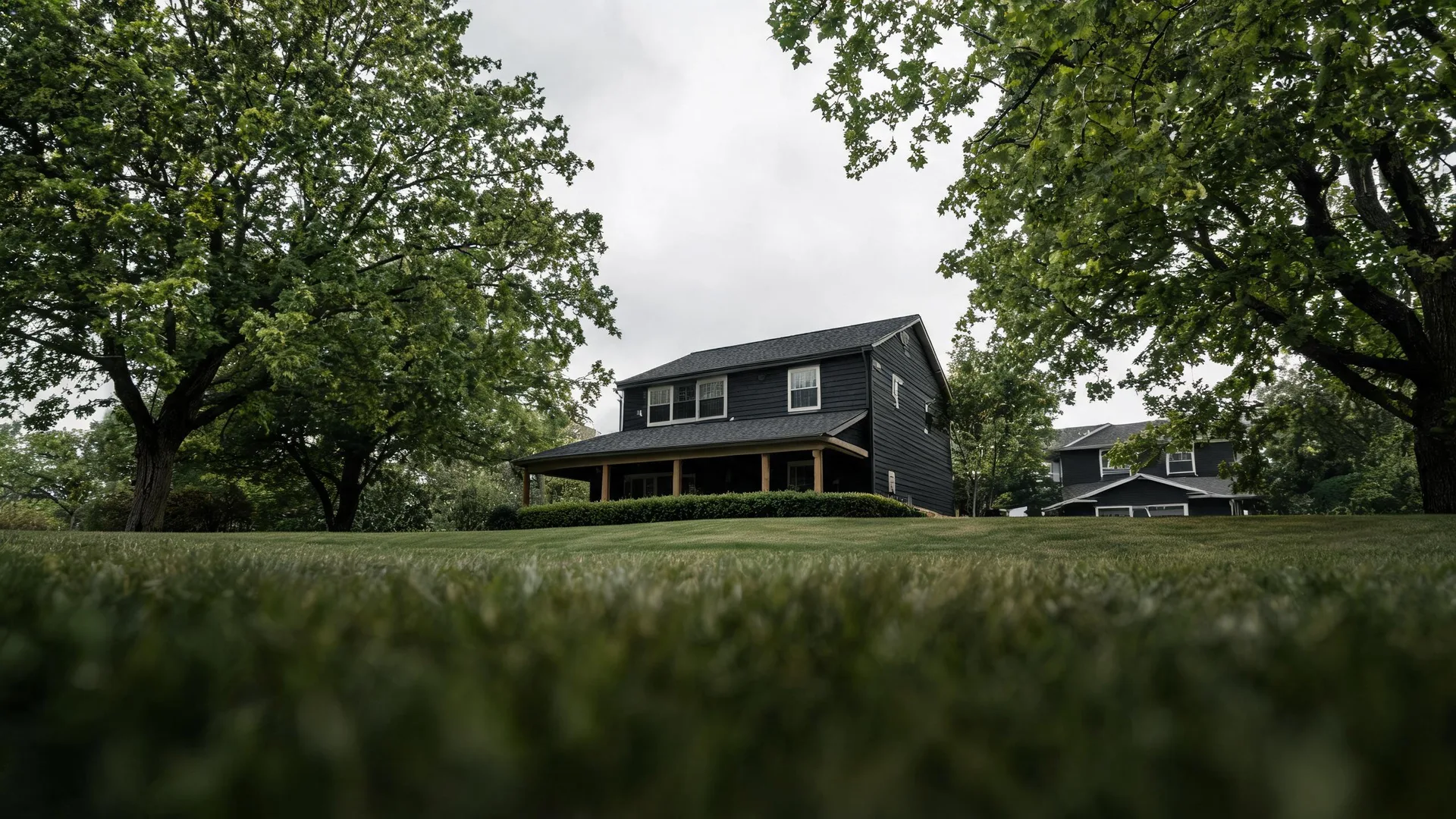







A low-angle view across a mown lawn toward a two-story dark-sided house with a covered front porch, flanked by large green trees under an overcast sky.

AC Installation in Mequon, WI

Tell us about the job

Takes about a minute. No obligation.

New system or replacementCentral ACOzaukee County, WI
Step 1 of 2

What ZIP code is the job in?

Utility gas heats 75.0% of homes in Ozaukee County, and most of those furnaces are paired with a central AC system that shares the same ductwork. If your home already has that setup, adding or replacing the AC side is usually straightforward. The furnace stays as is, the ducts stay as is, and the new condenser and coil match into what's already there. Homes on electric heat often run a heat pump instead, which handles cooling differently and is worth sorting out before you compare quotes.

2 months
July through August, your air conditioner is on duty
78°F
the average summer afternoon it cools against
26 hail events
in ten years, and hail bends the fins on outdoor coils
13.4 SEER2
the federal minimum any new unit must meet
Isometric cutaway illustration of a house interior showing ducted HVAC piping, an indoor air handler unit, and an outdoor condenser with fan connected by a line, rendered in grey tones on a white background.
Your air conditioner works hardest from July through August.

NOAA nClimDiv, 1991–2020 normals

Cooling only runs about two months a year here, July and August.

An AC system this lightly used doesn't need to be the top efficiency model to earn its keep.

Mequon summers don't ask much of an AC system

Power costs 17.18 cents a kWh statewide
Cooling runs July through August
Summer afternoons average 78°F
Two months of work a yearCooling starts in July here, so June is the month to get a new system in.

Mequon sits in climate zone 5A, a cool zone where winter heating matters more than summer cooling. That doesn't loosen the rules on the AC side. Any split-system central air conditioner under 45,000 Btu/h installed here has to meet a federal minimum of 13.4 SEER2. That's a federal floor, not a local one, so it applies whether you're matching into existing ductwork or putting in a full system. Any contractor quoting new equipment should already be working within it. A system that clears that minimum may also qualify for the federal energy efficiency tax credit, worth looking into before you settle on a model.

A standard system fits what this county needs

Half the homes in Ozaukee County were built in 1978 or earlier, half in 1978 or later. Older or newer, a standard size and efficiency system is built for what a Mequon summer asks of it. Nothing about this county pushes you toward a bigger unit or a pricier one.

Find a contractor
A man in a dark long-sleeve shirt and tan work pants carries a worn tool bag up concrete steps toward a green front door of a house with siding and a potted shrub.
A gray metal air conditioning condenser unit mounted on a concrete pad in a flat grassy field under a partly cloudy sky.

Two months of real work

Afternoon highs here average 78 across June, July and August, then the work is done. A condenser sized right for this kind of year isn't fighting the same battle a unit in a hotter state faces season after season. That's less reason to chase the highest efficiency number on the shelf, and more reason to pick equipment that's reliable and sized to the house.

The old condenser comes out

The installer recovers the leftover refrigerant, disconnects the lines, and unhooks the power before the outdoor unit gets unbolted from its pad and hauled off. If the coil inside the furnace is being swapped too, that comes out of the plenum at the same time. A new condenser is usually matched with a new coil rather than paired to an old one.

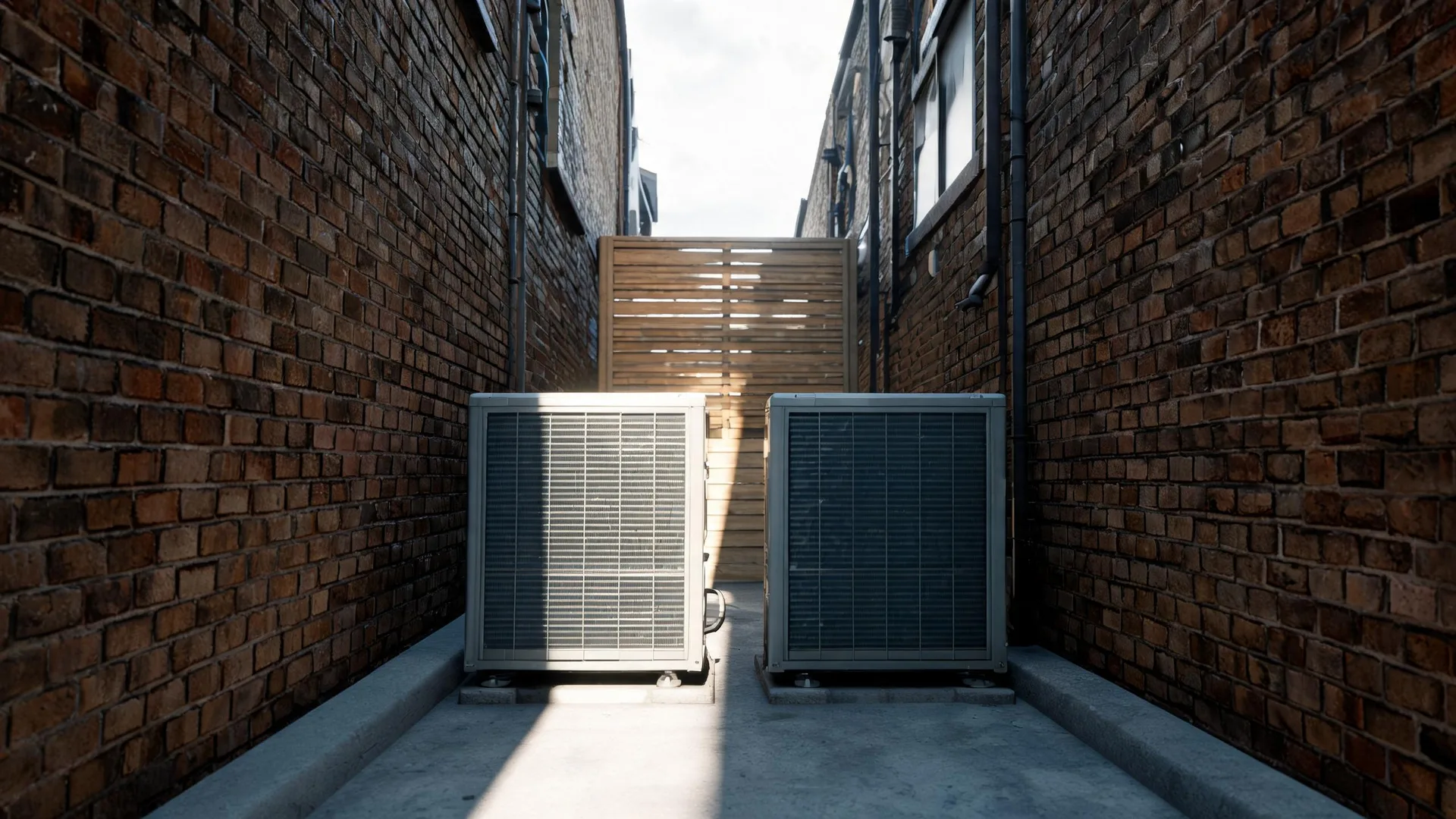
What that means for your job

Pulling the old equipment is routine work, not a separate project. The bigger question is what stays behind. The ductwork, the refrigerant line set, and the electrical whip all get checked before anything new goes in. If those are sound, the new system ties into them directly. If the line set is the wrong size for the new equipment, that gets swapped too, and it's worth asking the contractor to check before the install date rather than on it.

An outdoor air conditioning condenser unit positioned beside a blue-sided house at sunset.

Going above the federal minimum saves little here, about $10 a year.

  • A higher-efficiency unit$130 a year
  • A new unit at the federal minimum, 13.4 SEER2$140 a year

Estimates for a typical Ozaukee County home, from EIA household energy data, Wisconsin fuel prices and NOAA climate normals. Your home will differ.

Installation day starts with the parts that don't move. The electrical disconnect gets locked out, the refrigerant lines get capped, and the pad or mounting brackets outside get set level before the new condenser ever comes off the truck. Level matters more than it sounds like it should. A unit sitting even a little off can wear the compressor mounts wrong over the years. Once the outdoor unit is set, the lines get connected. Then the system gets pulled down to vacuum to clear out any moisture or air, and charged to the manufacturer's spec. A furnace blower or coil swap, if that's part of the job, happens alongside this rather than after it. The last steps are the ones that actually tell you if it was done right. The refrigerant charge gets checked against the manufacturer's numbers, airflow gets checked at the vents, and the thermostat gets confirmed to be talking to the new equipment the way it should.