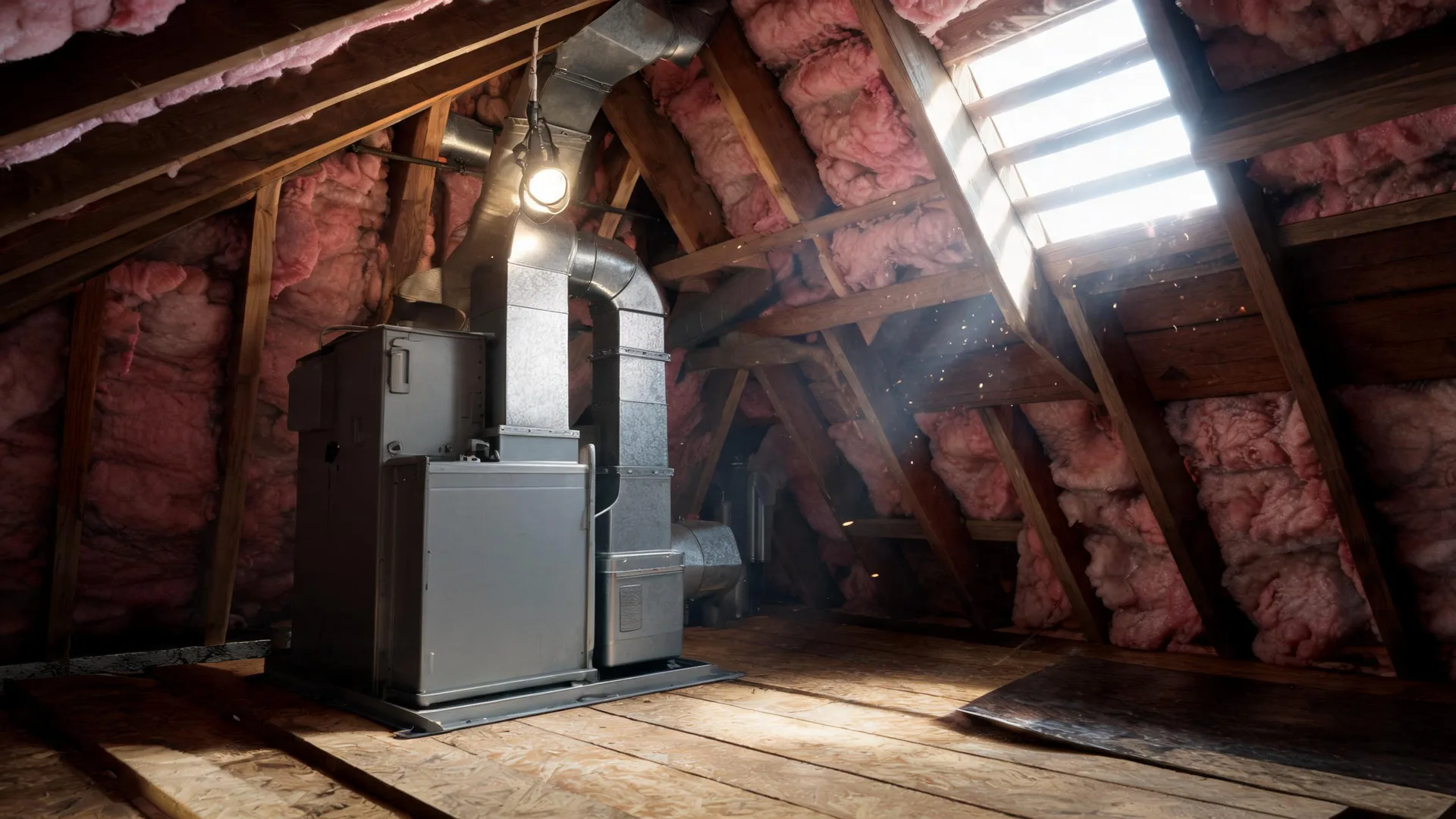
Gas heat is the default here
Utility gas heats 75.3% of occupied homes in Kenosha County. That usually means a gas furnace already sitting next to the spot where central air goes, with the ductwork in place to carry cold air too.
Takes about a minute. No obligation.
Utility gas heats 75.3% of occupied homes in Kenosha County. That usually means a gas furnace already sitting next to the spot where central air goes, with the ductwork in place to carry cold air too.
If your home has a gas furnace, adding or replacing central air is mostly a matter of matching a condenser and coil to the ductwork that is already there, rather than building an air delivery system from nothing.

NOAA nClimDiv, 1991–2020 normals
Three months of cooling, June through August, with afternoon highs averaging 80°F.
A condenser that only has to work a short season holds up well here, so put the money into getting the install right, not into a top-tier efficiency rating.




Kenosha County falls in zone 5A, a cool, humid climate where heating carries most of the load. Cooling equipment still has to meet a federal floor either way. Any split-system central air conditioner under 45,000 Btu/h made from 2023 onward has to hit at least 13.4 SEER2. That rating is set at the manufacturer level. A contractor cannot spec around it. Once a unit clears that minimum, the rest comes down to matching it to your ductwork and getting the install done right.
It won't be worked hard here, so pick a reliable system that fits. You don't need the top efficiency model.
Find a contractorThe SEER2 number on the label is a season-long average, not a reading at one setting. It reflects how the system behaves cycling on and off, running at partial load most of the time rather than flat out. That number only holds if the coil and condenser are the matched pair they were tested as together. Put a different coil on that condenser and the installed system will not perform at what the sticker says, no matter what's printed on the paperwork. The rating also describes the equipment when it's new. It says nothing about what a dirty coil or a slow refrigerant leak does to the bill down the road. Keeping the coil clean and airflow clear does more for real-world efficiency over the years than the gap between one rating and the next one up.
A contractor should run a load calculation on the house, checking window area, insulation and ductwork, rather than sizing off the old unit or a rule of thumb. An oversized condenser cools the air fast and shuts off before it pulls the moisture out, which leaves the house feeling clammy even at the right temperature.
The indoor coil and the outdoor condenser have to be a matched set rated to work together. Pairing a new condenser with an old coil might run, but it won't hit the rating on the label, and it puts more strain on the compressor over time. Get the model numbers in writing before the work starts, not after.
Estimates for a typical Kenosha County home, from EIA household energy data, Wisconsin fuel prices and NOAA climate normals. Your home will differ.
Install day starts with the old equipment coming out, if there is any, and the ductwork getting a real look before anything new goes in. The condenser sets on a pad outside. The coil goes in the plenum above or beside the furnace. Copper line runs between them to carry refrigerant. Once the lines are connected, the installer pulls a vacuum on the system to clear out air and moisture before the refrigerant charge goes in. That charge gets weighed in against the line length, not eyeballed. Last comes the test, running the system, checking the temperature split between the air going in and the air coming out, and watching that the condensate drains where it should instead of backing up.