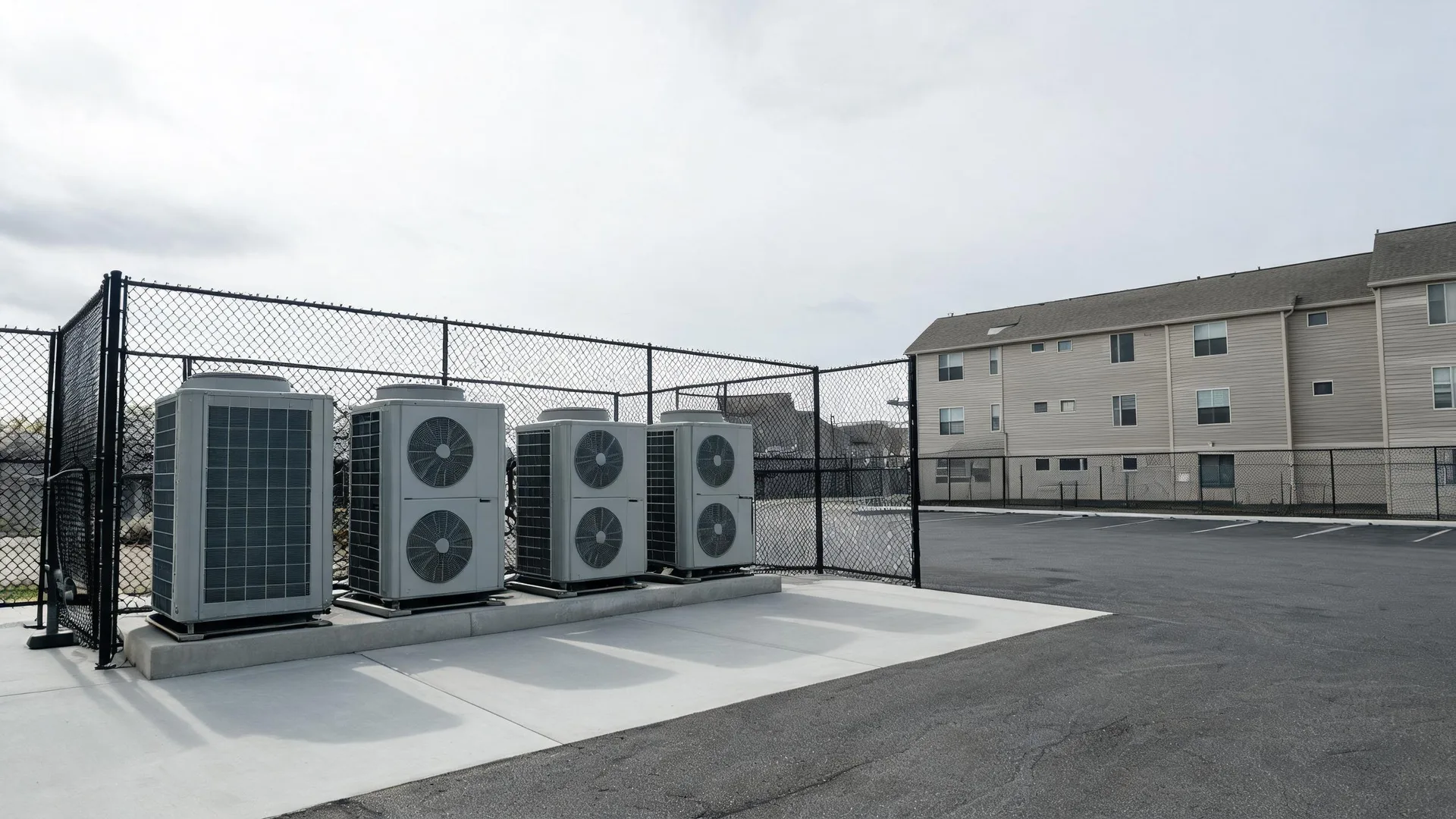
Most homes here run on gas
Gas heats 70.9% of homes in Calumet County. If your furnace is gas, your new AC just needs to pair with it, usually a coil matched to the furnace's blower and the line set run to an outdoor unit.
Takes about a minute. No obligation.
Gas heats 70.9% of homes in Calumet County. If your furnace is gas, your new AC just needs to pair with it, usually a coil matched to the furnace's blower and the line set run to an outdoor unit.
A gas furnace means the home almost certainly has ducts in place for a system installation to connect into, rather than requiring new ductwork built from scratch.

NOAA nClimDiv, 1991–2020 normals
Summers here average 79°F and last about two months, July and August.
An AC in Harrison isn't working against much, so a reliable system is worth more here than a top-tier one.




Calumet County falls in climate zone 5A, a cool zone where winter heating matters more than summer cooling. That doesn't change what's allowed on the cooling side. Any split-system AC under 45,000 Btu/h built from 2023 onward has to meet 13.4 SEER2 at minimum, the same federal floor that applies everywhere. A contractor quoting a new system here should already be working from that number. It's not a regional upgrade, it's the baseline anything on the market now has to clear.
A system that isn't working hard doesn't need to be the best one on the shelf. Put the money into a unit sized right and installed clean, with good wiring and a properly set charge, and let reliability do the work here instead of a high-end spec sheet.
Find a contractor
A correctly sized system comes from a load calculation, not from matching the old unit or going off square footage alone. The contractor measures the house. Window area, which way the house faces, insulation, ceiling height, how many people live there. That math produces a cooling load, and the unit gets matched to it. Go too big and the air cools fast but the system shuts off before it pulls the moisture out, so the house feels cold and damp at once. It also cycles on and off more than it should, and every start wears on the compressor. Go too small and it runs flat out on the hottest days and never catches up. Either way the equipment doesn't last as long as it should. The right size runs long, steady cycles and holds an even temperature, spending most of its life well under its rated maximum.
A manufacturer's parts warranty doesn't cover labor unless the installing contractor registers the unit and backs it with their own labor warranty. Ask who pays the tech to come out if the compressor fails down the road. Some contractors offer a labor warranty of their own on top of the manufacturer's parts coverage, and some don't. That gap is where a cheap repair turns into an expensive one.
If the new system reuses the existing line set instead of running new copper, ask whether it was flushed and pressure tested. Old refrigerant oil and debris left in the lines contaminate a new compressor fast. Reusing the line set can be fine, but only after it's cleaned out and checked for leaks, not just reconnected and charged.
Estimates for a typical Calumet County home, from EIA household energy data, Wisconsin fuel prices and NOAA climate normals. Your home will differ.
Most installs run a full day, sometimes into a second if the ductwork needs changes. The old unit and coil come out first, then the line set gets cut and the new coil goes in above the furnace. From there it's new line set run to the outdoor pad, the electrical whip connected, and the system pulled down into a vacuum to clear out any moisture or air before refrigerant ever touches it. A good contractor doesn't just set the charge and leave. They check static pressure in the ducts, confirm airflow across the coil, and run the system long enough to watch it settle into a steady cycle. That vacuum step matters more than anything else on the list, since any moisture left in the lines turns to acid once the compressor starts running.