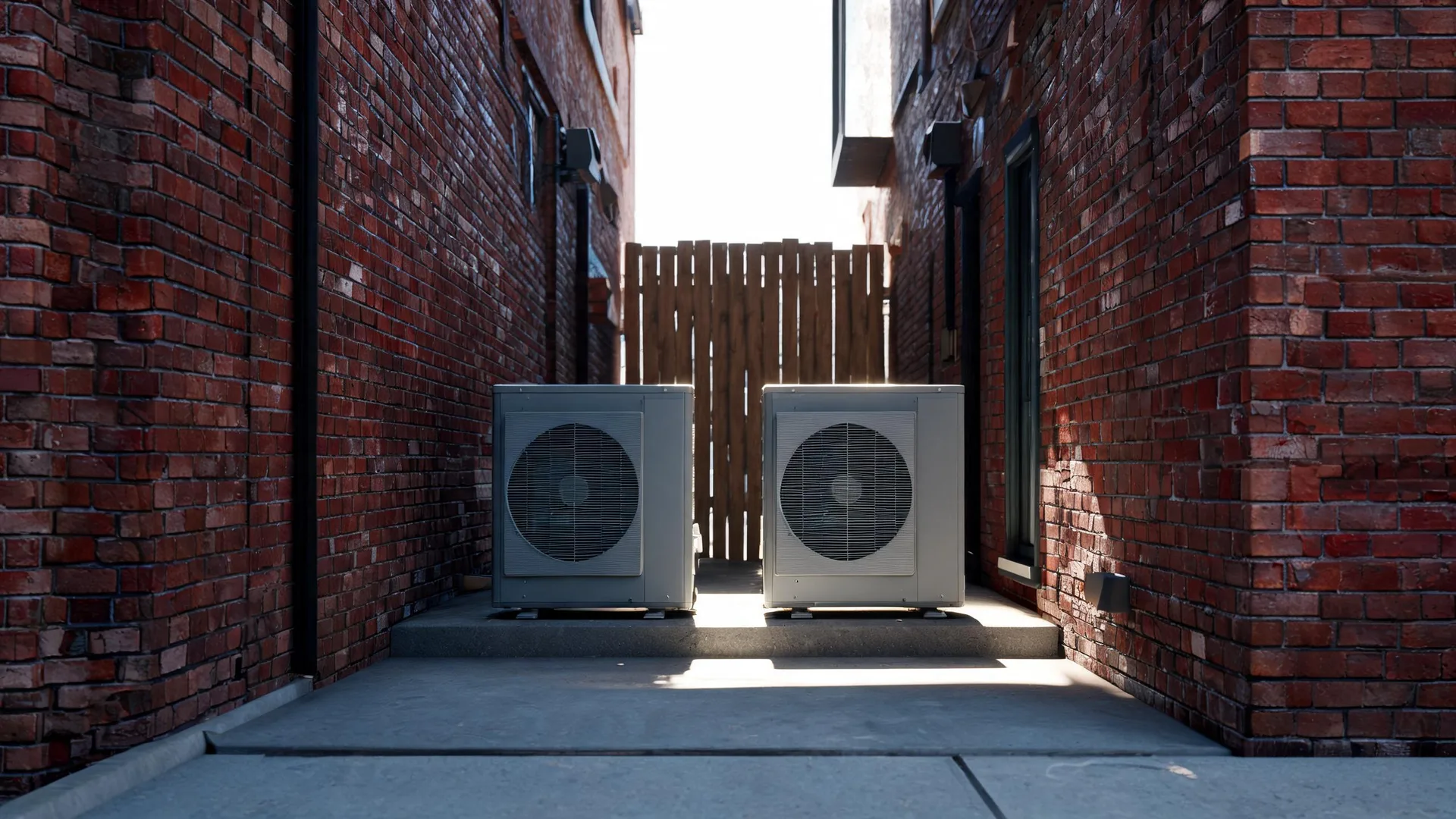
Most homes here run on gas
Utility gas heats 65.6% of homes in Fond du Lac County. The furnace sits with the air handler, and most central air conditioners here get installed as a match to that existing setup.
Takes about a minute. No obligation.
Utility gas heats 65.6% of homes in Fond du Lac County. The furnace sits with the air handler, and most central air conditioners here get installed as a match to that existing setup.
An AC installation here usually pairs new outdoor equipment with the blower already in place. If your furnace is old or was sized for a different system, that's worth checking before the new unit goes in.

NOAA nClimDiv, 1991–2020 normals
Half the homes in Fond du Lac County were built in 1971 or earlier.
An older house can still take a new AC, but the ductwork and the furnace pairing need a look first.


There's nothing about Fond du Lac that calls for oversizing a system or stretching for a higher efficiency tier. A unit sized to the house does the job. Wisconsin electricity ran 17.18 cents per kilowatt-hour in 2024, and that cost is the same whether the equipment is standard or top of the line. Spending more upfront on a bigger compressor doesn't buy comfort here. The honest approach is to size it to the house and let the installer size it to the ductwork, not the other way around.
Any split-system AC installed here now has to meet 13.4 SEER2 at minimum, the federal floor for this equipment size. That's the baseline, not an upgrade. On top of that, a federal tax credit is available for qualifying high-efficiency equipment. Worth asking your installer which units on the list qualify before you settle on one.
Find a contractorThree months of cooling, June through August, with afternoons averaging 79°F. That's a light load next to most of the country. A central air conditioner installed here sits idle most of the year, and that light use means a properly sized unit from a good installer won't see the kind of hours that wear down a compressor. What cuts into a system's life here is more likely to be a bad storm than a hot summer. Solid outdoor equipment matters more than a higher efficiency tier most summers won't ask for.
The rating on the label compares cooling output to the electricity it takes to produce it. It tells you how the equipment is built to perform under standard test conditions. It doesn't promise what your bill will look like, because that depends on the ductwork, how well the unit was charged and set up, and how the thermostat gets used.
The gap between a baseline unit and a high-efficiency one shows up in electricity saved while the system runs. Fewer months of cooling means fewer chances for that gap to add up. The rating still matters for comfort and for qualifying for any credit tied to it, but it isn't the only thing worth weighing against the price difference.
Estimates for a typical Fond du Lac County home, from EIA household energy data, Wisconsin fuel prices and NOAA climate normals. Your home will differ.
Installation day starts with the old equipment coming out, not the new one going in. The outdoor unit gets disconnected and removed, the indoor coil gets pulled, and the line set usually gets replaced rather than reused. A good installer checks the ductwork for leaks and the right return size before setting the new unit, because a system can be sized correctly and still underperform if the air can't move through the house. The refrigerant lines get brazed, pressure tested, then pulled into a vacuum to clear out moisture and air before any refrigerant goes in. Once it's running, the charge gets checked against the manufacturer's numbers and the airflow gets checked at the vents. None of that shows up on the label, but it's what decides whether the system runs the way it's supposed to for years rather than months.