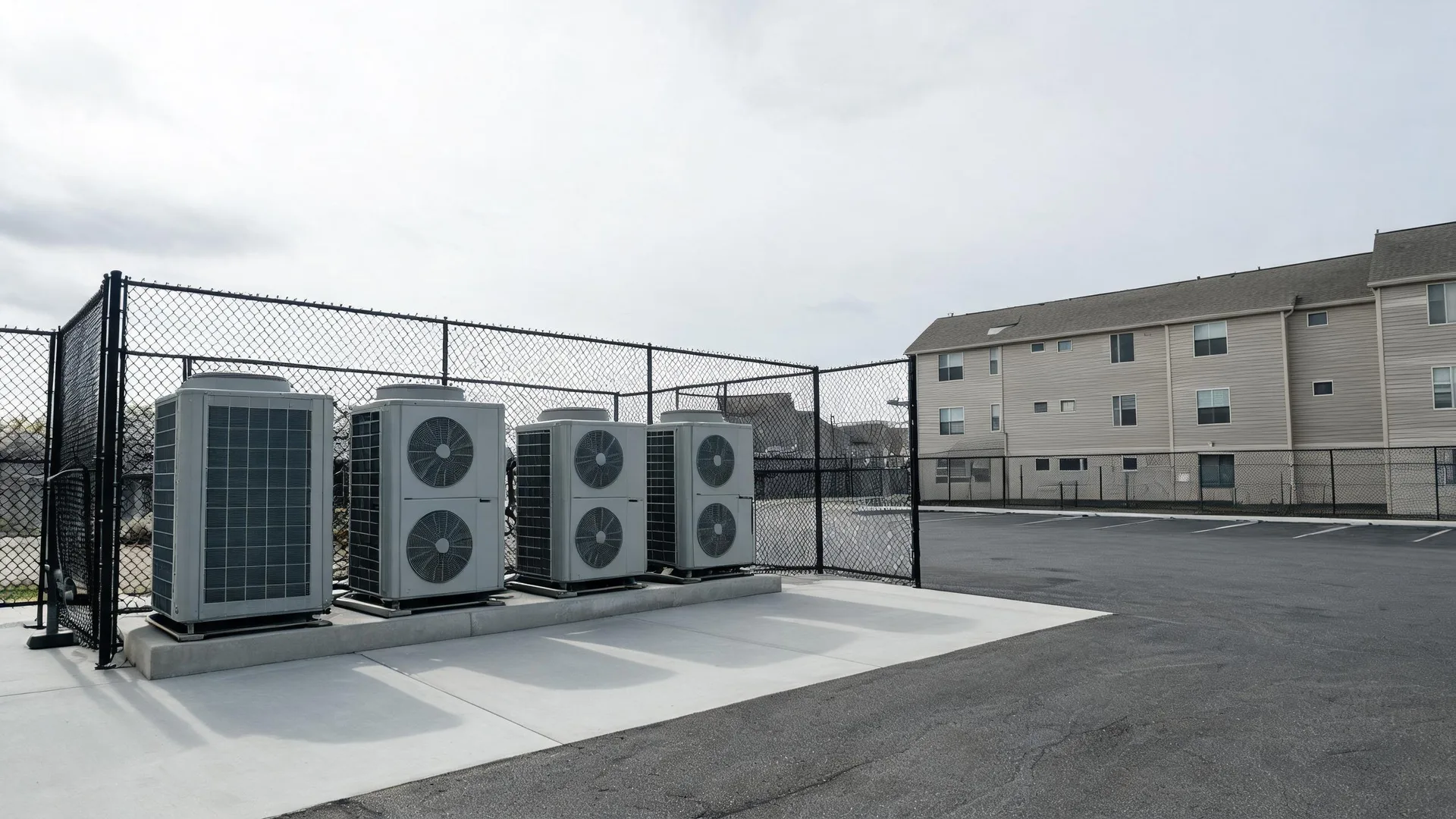
Gas furnaces are the norm here
Utility gas heats 57.2% of homes in Eau Claire County. Most AC installations here pair a new condenser and coil with an existing gas furnace, since the furnace blower moves the cooled air through the same ducts.
Takes about a minute. No obligation.
Utility gas heats 57.2% of homes in Eau Claire County. Most AC installations here pair a new condenser and coil with an existing gas furnace, since the furnace blower moves the cooled air through the same ducts.
If your home heats with a gas furnace, it almost certainly has ducts a contractor can connect new AC equipment to. That usually means installing a coil and outdoor unit rather than building a duct system from scratch.

NOAA nClimDiv, 1991–2020 normals
AC here only runs about three months, June through August.
A system working three months a year doesn't need to be the top-tier model to hold up.


May is a better time for this than June. Cooling runs June through August here, and once those months hit, contractors are busy with repair calls, not installs. Put the new condenser and coil in during May and it's already running before you need it. That gives time to catch a bad connection or a setting that needs adjusting before the first hot week. Wait until June and you're scheduling around everyone else's emergency.
Any split-system AC installed here now has to meet 13.4 SEER2 at minimum, the federal standard for this size of equipment. That's the floor, not a special upgrade, so it's worth confirming the system you're quoted actually meets it.
Find a contractorHalf the homes in Eau Claire County were built in 1978 or earlier, half in 1978 or later. Neither side needs anything different from a standard condenser. The compressor doesn't know or care how old the house around it is, only how many hours it runs and what load it's matched to. A correctly sized system cycles on and off the same way in an older house as it does in a newer one. If your ductwork is original to the house, that's worth a look before installation, but the age of the home by itself isn't a reason to size up or pay for a higher tier.
A contractor should run a load calculation based on the house, its windows and its insulation, not just match the size of the unit that's already there. Too big and the system cools the air fast but shuts off before it pulls the moisture out, leaving the house cold and damp. Too small and it runs constantly without reaching the thermostat setting. Ask to see the number, not just hear a model name.
The new coil and condenser only work as well as the ducts carrying that air. A contractor should check for crushed runs, disconnected sections, or supply and return sizes that don't match what the new system moves. Installing new equipment onto ducts that leak or restrict airflow caps what that equipment can actually do, no matter how it's rated.
Estimates for a typical Eau Claire County home, from EIA household energy data, Wisconsin fuel prices and NOAA climate normals. Your home will differ.
Installation day starts with the old equipment coming out, the condenser outside and the coil in the plenum above the furnace. The refrigerant in the old system gets recovered, not vented, so that happens before anything is disconnected. Once the new coil is set in place, the line set connects it to the outdoor condenser, and those joints get brazed, not just fitted together. The system is then pressure tested to make sure those connections hold before any refrigerant goes in. After that it gets charged to the amount the equipment calls for and run through its paces, checking the temperature drop across the coil and the pressures on both sides of the line. A contractor should walk through the thermostat settings before leaving, so the system is actually cooling, not just installed.