




An outdoor air conditioning condenser unit mounted on a concrete pad next to a blue-sided residential house at sunset.

AC Installation in Baraboo, WI

Tell us about the job

Takes about a minute. No obligation.

New system or replacementCentral ACSauk County, WI
Step 1 of 2

What ZIP code is the job in?

Most homes in Sauk County heat with utility gas, at 56.1 percent. Bottled or LP gas covers another 19.3 percent, and electricity heats 16.9 percent. That matters for AC installation because a gas furnace usually already has the ductwork a central air system needs. If your home heats with gas forced air, adding AC often means connecting a new outdoor unit and coil to that same duct system rather than building one from scratch. Homes that heat with electric baseboard or radiant systems don't have that ductwork in place, so central air there is a bigger job.

3 months
June through August, your air conditioner is on duty
80°F
the average summer afternoon it cools against
22 hail events
in ten years, and hail bends the fins on outdoor coils
13.4 SEER2
the federal minimum any new unit must meet
Isometric cutaway illustration of a house showing attic ductwork, an indoor air handler, refrigerant lines running outside, and an outdoor condenser unit on a pad.
Your air conditioner works hardest from June through August.

NOAA nClimDiv, 1991–2020 normals

AC here runs June through August.

May is the month to get a new system installed, before the first hot week puts it to work.

Three months of real work a year, so the system doesn't need to be a hero

Cooling runs June through August
Summer afternoons average 80°F
61 damaging wind events from 2015 to 2024

Baraboo sits in climate zone 5A, a cool zone where heating carries the bigger load but summers still run humid. Any split-system central air conditioner under 45,000 Btu/h installed here now has to meet 13.4 SEER2 at minimum. That's a federal floor, not a local one, so it applies whether the house is on gas forced air or something else. It narrows what a contractor can offer you. Ask what SEER2 rating a quoted system carries, and check it against that number.

Replace it before the season

Replace it before the season starts, so it happens on your schedule, not in a hurry.

Find a contractor
A man in a dark T-shirt and tan work pants, carrying a canvas tool bag, walks up wooden steps toward a green front door flanked by white siding and a potted shrub.
An outdoor residential air conditioning condenser unit mounted on a concrete pad, surrounded by gravel with a blue sky in the background.

Pick it for what it has to survive, not just what it has to cool

That condenser only has to cycle for three months a year, June through August, and afternoons here average 80 degrees rather than the extremes units face further south. That's a reason to spend less on chasing the highest SEER2 number and more on who installs it and how. A mid-range system set up right, with the charge checked and the ducts sealed, will outlast a top-tier one put in wrong. The outdoor unit still sits outside year-round, through wind and hail, whether it's running or not. Ask what the cabinet and coil fins are built to take, not just what the compressor can do on a hot day.

Bigger isn't better

An oversized air conditioner cools the air fast and shuts off before it pulls the humidity out of the room. The space feels clammy even at the right temperature. The compressor also short cycles, starting and stopping more than it should, and that wears it out sooner. A system that's too small has the opposite problem. It runs long and never catches up on the hottest afternoons. The right size does neither.

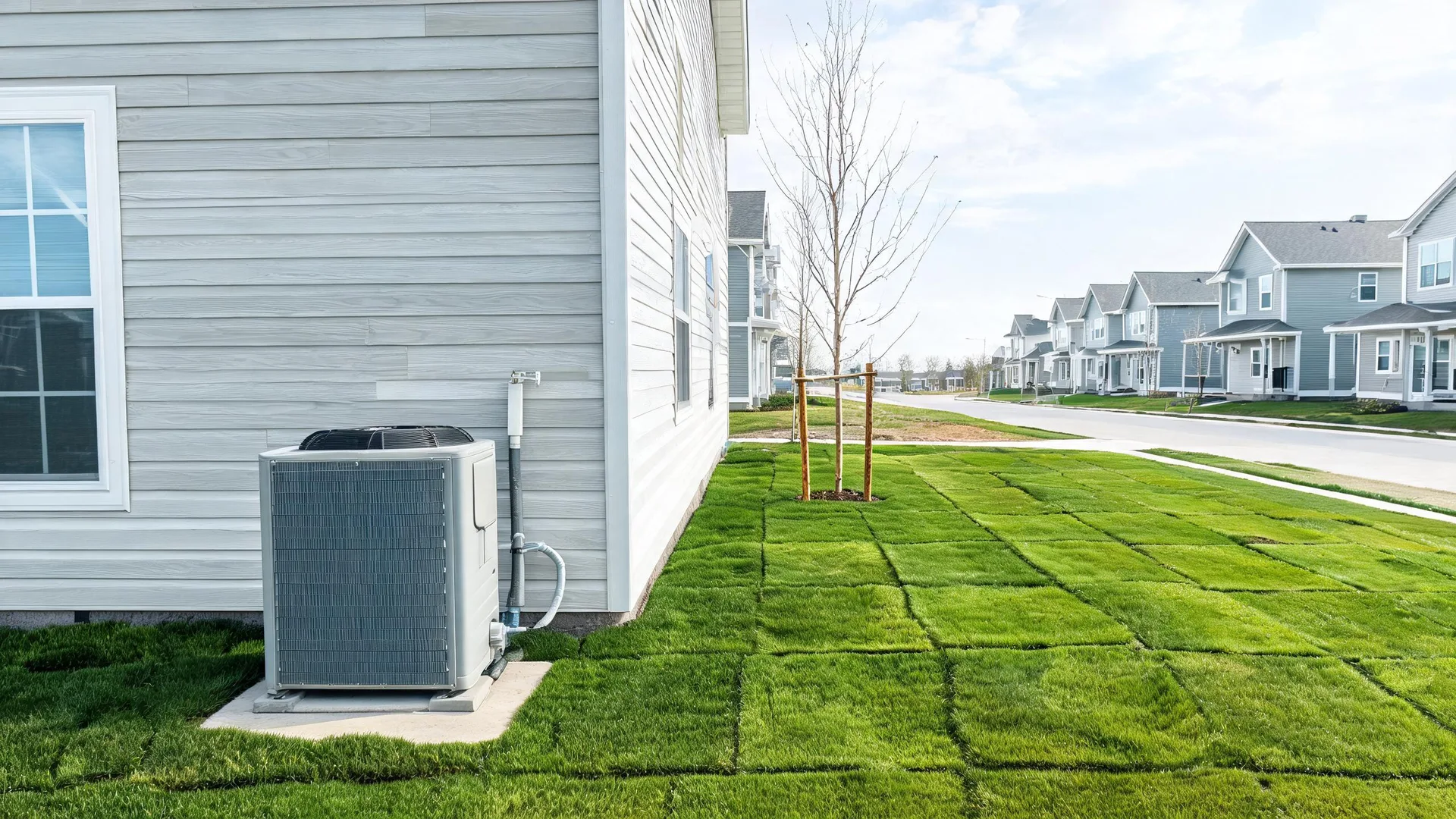
The load calculation is the job

Sizing an AC means working out the heat load room by room. A contractor looks at square footage, window area and direction, ceiling height, insulation, and how much air leaks in and out. That means measuring the house itself, not the old equipment, because a system installed years ago may have been sized wrong from the start. Ask whoever quotes the job to walk you through that calculation, and ask to see the numbers behind the final tonnage, not just the number itself.

An outdoor air conditioning condenser unit positioned on a concrete pad next to a blue-sided house, surrounded by green shrubs and flowering hydrangeas at sunset.

Going above the federal minimum saves little here, about $20 a year.

  • A higher-efficiency unit$150 a year
  • A new unit at the federal minimum, 13.4 SEER2$170 a year

Estimates for a typical Sauk County home, from EIA household energy data, Wisconsin fuel prices and NOAA climate normals. Your home will differ.

Installation starts with the old equipment coming out, not the new unit going in. The crew disconnects the refrigerant lines, pulls the old condenser and coil, and checks the ductwork that's staying behind for leaks or damage before anything new goes in. The new coil sits in the plenum above or beside the furnace, and the line set connecting it to the outdoor unit gets run and brazed, not just bolted together. Once the system's together, it gets evacuated to pull moisture and air out of the lines, then charged with refrigerant to the weight the manufacturer specifies for that line length. A gauge gives the real charge, not a guess. Only after that does anyone power it up and check that it's pulling the temperature down and holding steady, because a system that runs but isn't charged right will leave you short on comfort for as long as it's in the ground.