Three lit brick homes on a tree-lined residential street photographed at dusk.

Heat Pump Repair in Janesville, WI

Tell us about the job

Takes about a minute. No obligation.

RepairHeat PumpRock County, WI
Step 1 of 2

What ZIP code is the job in?

September is when a weak heat pump gets found out

Heat in Rock County starts in October, and the system switches over from cooling the month before. A heat pump that limped through summer on a low charge or a tired contactor usually shows it the first cold morning it has to run heat instead of cooling.

Get it looked at before October

Heat here runs eight months, October through May, so a problem that shows up early is one the system will live with most of the year. Catching the cause now, while the load is still light, is easier than waiting until the house depends on it every day.

8 months
October through May, your system heats
3 months
June through August, it cools
16°F
the average winter night it heats against
81°F
the average summer afternoon it cools against
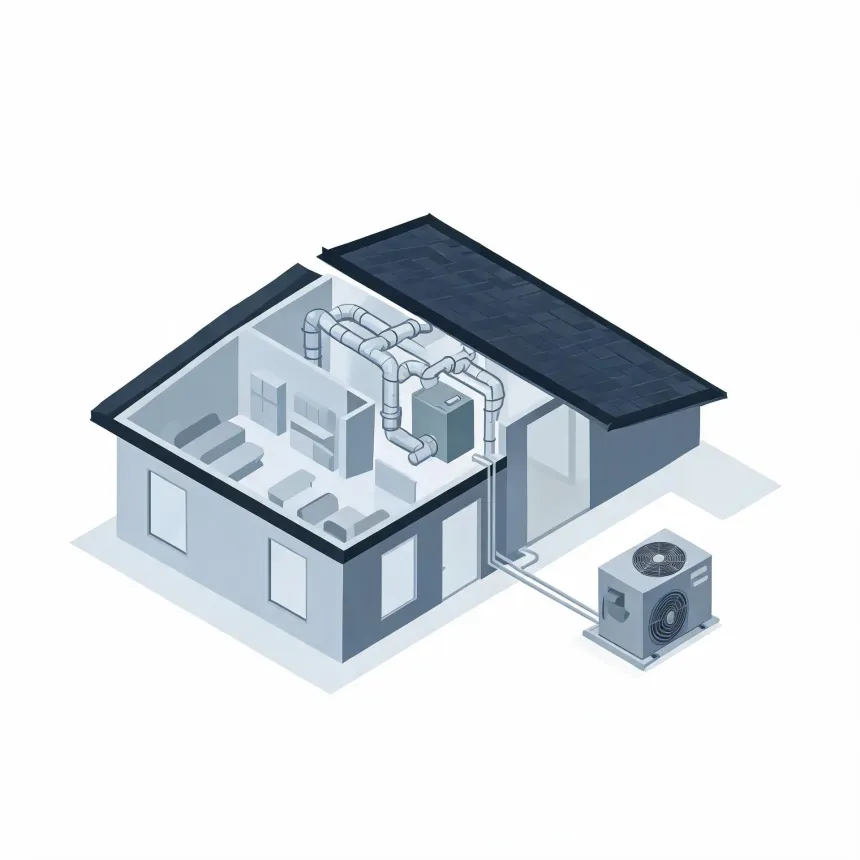
Isometric illustration of a cutaway single-story house showing interior ductwork and an air handler connected by lines to an outdoor condenser unit on a pad beside the building.
Your system heats October through May and cools June through August.

NOAA nClimDiv, 1991–2020 normals

A heat pump blowing air that doesn't feel warm is often stuck in defrost or running on backup heat strips alone.

If the air feels cool to the skin even though the system is running, call before the next cold snap, not after.

Janesville pays 17.18 cents a kWh, so a heat pump limping along costs you every month it runs

Power costs 17.18 cents a kWh statewide
78 damaging wind events from 2015 to 2024
41 hail events from 2015 to 2024

Rock County gets wind, hail and the occasional tornado, same as the rest of southern Wisconsin. None of that is what wears out a heat pump. A storm closes it up tight for a day and that's the extent of it. What actually fails is the same short list everywhere. A contactor pitted from cycling on and off. A capacitor that's weakened. A refrigerant charge that's dropped low enough to stop the unit from pulling heat out of cold air. If your heat pump is struggling, look at what it's done, not where it sits.

If your house is older, your heat pump might be too

Half the homes in Rock County were built in 1970 or earlier. If your heat pump came with a house that old, it may be on its original system, or close to it. Before you pay for a big repair, it's worth asking how much life the unit has left.

Find a contractor
A residential heat pump outdoor unit mounted on a concrete pad next to a house with gray vinyl siding.

What you can check before the truck shows up

Before anyone comes out, there are a few things worth checking. Start at the thermostat. Make sure it is set to heat, not cooling, and that the set temperature is actually above room temperature. A setting left over from the last warm day will make a working system look broken. Check the breaker next. A heat pump that will not start at all is worth a look in the electrical panel first. Go outside and look at the unit itself. If the outdoor coil is caked in ice or the fan is iced in place, note it, but do not chip at it or pour water on it. Check the air filter too. A filter choked with dust cuts airflow across the indoor coil, and that alone can look like a refrigerant problem from inside the house. Walk the vents and feel for airflow at each one. One room with nothing while the rest are fine points somewhere different than a whole house running weak. None of this tells you what is broken. It tells the tech what you already ruled out, and that is where they start instead of where you did.

A struggling compressor only gets worse under load

A compressor low on charge or pulling too hard on a worn start component still moves heat, just not well. Keep running it that way and it builds more heat inside itself than it was built to handle. That heat breaks down the oil that's supposed to protect it. What started as weak output turns into a seized compressor, and that's the whole unit, not a part.

A failing part rarely fails alone

A contactor with pitted contacts makes the compressor strain every time it tries to pull in. A reversing valve that's starting to stick forces the fan motor and compressor to fight each other instead of working together. The longer any of that runs, the more of the system it drags down with it. Shutting it off and getting it looked at stops the damage where it started.

Most heat pump failures start small. A reversing valve that sticks won't switch the system fully from heat to cooling or back, so one mode works fine and the other doesn't. A defrost sensor that fails leaves frost building on the outdoor coil until the unit can't pull heat from the air at all. Low refrigerant almost always means a slow leak somewhere in the line set, not a one-time event, so topping it off without finding the leak just delays the same call. Fan motors wear out like any motor does, bearings first, then noise, then nothing. None of these announce themselves loudly. They show up as weak heat, long run times, or a system that runs constantly and still can't keep up.

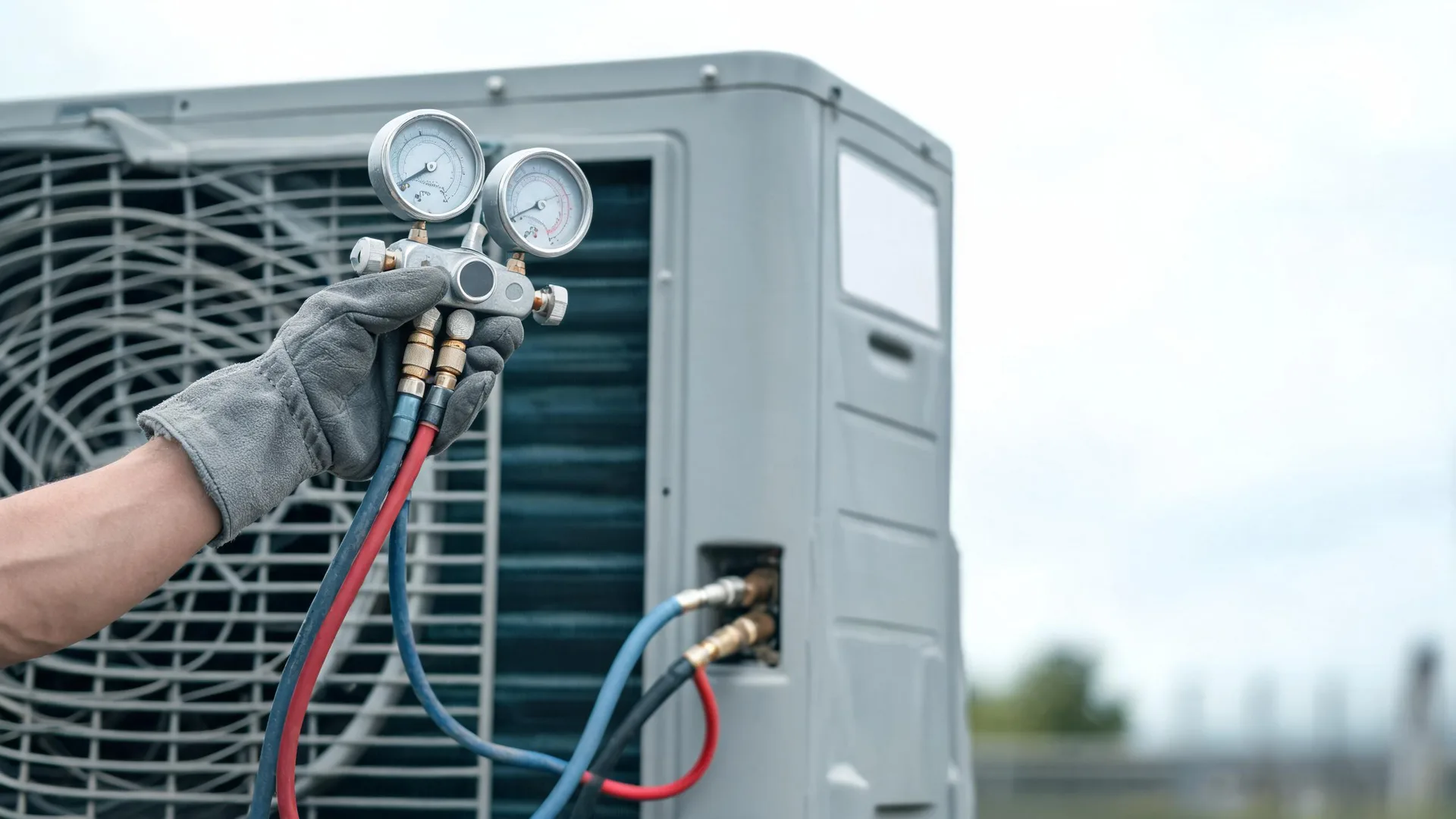
A diagnostic visit starts with questions. What the system is doing, when it started, whether it's one mode or both. Then a tech checks pressures with gauges on the refrigerant lines, because that number tells them more than almost anything else about what's wrong. They'll check the contactor and capacitor by sight and by meter, since both can look fine and still be failing. Electrical readings come next, voltage and amp draw at the compressor and fan motor, to see if either is pulling harder than it should. Outside, they'll look at the coil for frost or ice and check that the reversing valve is actually switching when it's told to. None of this takes guesswork. The readings either match a healthy system or they point straight at the failing part.